
Serbia
Serbia Calls in Russian IL-76 for WildfireRussian IL-76 joins the battle against the Deliblato Sands wildfire after Serbia asks Moscow for help
A Russian IL-76 firefighting aircraft is battling the Deliblato Sands wildfire after Serbia asked Moscow for help — just four days after President Aleksandar Vučić said the country had enough resources to fight the fires on its own.


The IL-76 is now fighting the fire over the Deliblato Sands, just four days after Serbian President Aleksandar Vučić said Serbia did not need foreign assistance because it had enough personnel, expertise and helicopters to deal with the wildfires on its own.
The aircraft did not arrive uninvited, either. According to the Russian side, Serbia turned to Moscow for help after the situation deteriorated to a critical level. This raises an obvious question: did conditions change so dramatically in just four days, or had Belgrade previously simply chosen not to make use of the European assistance that was available?
The IL-76 can provide something the EU could not at this moment
A Russian Ministry of Emergency Situations IL-76 joined firefighting operations over the Deliblato Sands on Thursday, where a major wildfire has been burning for weeks. The aircraft took off from Niš Constantine the Great Airport after being loaded with water and began operations in coordination with the helicopter unit of Serbia’s Ministry of Interior.
The IL-76 can drop up to 42 tonnes of water in a single run. According to Serbian Interior Minister Ivica Dačić, no firefighting aircraft with that capacity is currently available through the European Union Civil Protection Mechanism.

The Russian IL-76 arrived at Niš Constantine the Great Airport on Wednesday evening and began fighting the wildfire over the Deliblato Sands on Thursday morning in coordination with the helicopter unit of Serbia’s Ministry of Interior (Source: Screenshot, N1)
The Russian aircraft arrived in Niš on Wednesday evening. According to Moscow, Russian President Vladimir Putin ordered the deployment of the aircraft, its crew and an operational group from the Ministry of Emergency Situations to Serbia.
Serbia asked Russia for help
The politically interesting detail is that, according to the Russian Embassy, the request for assistance came from the Serbian side.
The embassy said that Serbia had turned to Russia because of the critical deterioration of the wildfire situation and the growing threat to populated areas. The Russian units are expected to assist in containing the forest fires and protecting settlements and critical infrastructure.
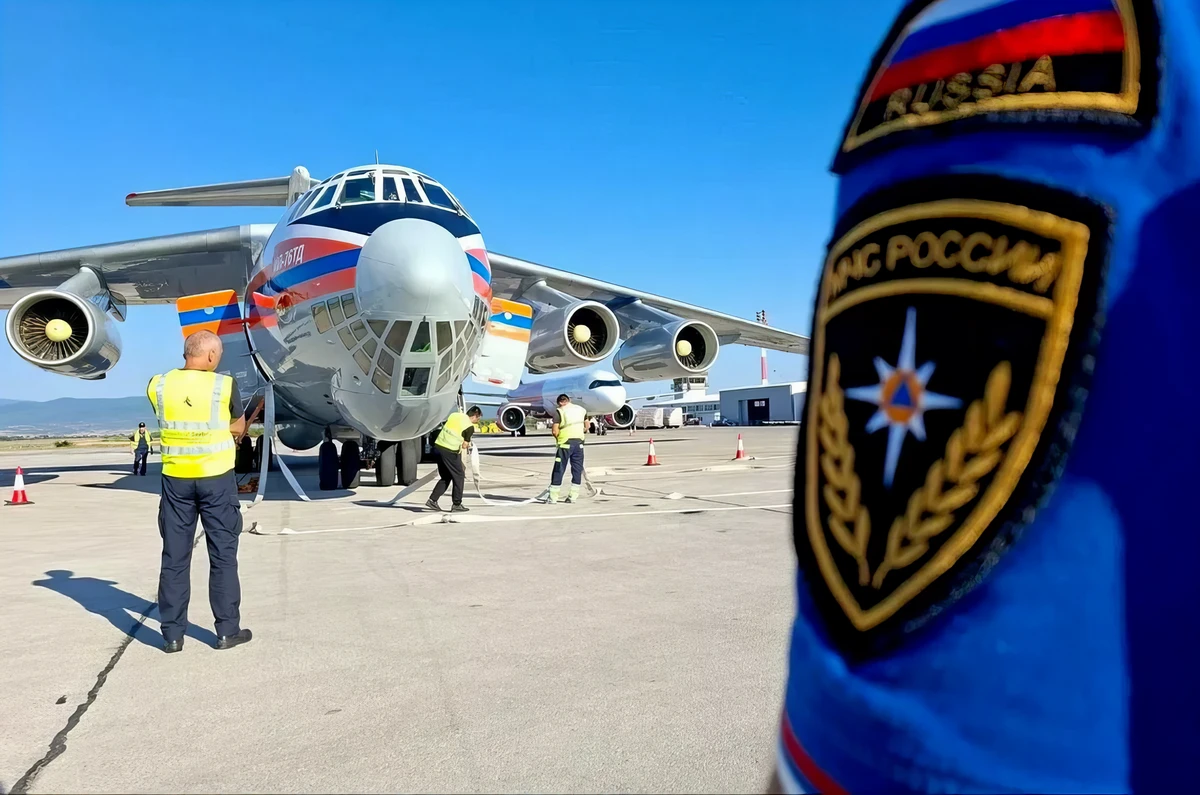
The Russian IL-76 was loaded with water before taking off on its firefighting mission
Conditions on the ground are indeed serious. According to N1, more than 3,500 hectares of forest and vegetation have already been affected, while firefighters are currently trying, among other things, to protect the village of Grebenac.
Strong winds and extreme heat are making their work more difficult. Another heatwave is beginning in the region, with temperatures expected to reach as high as 42 degrees Celsius in some areas.
According to an N1 reporter, police checkpoints have also been established around the Deliblato Sands, and vehicles without special permits are being turned back for safety reasons because the flames have reached areas close to the roads.
Four days earlier, Vučić said foreign help was not needed
The arrival of Russian assistance is particularly noteworthy in light of a statement made by Aleksandar Vučić on August 16.
At the time, the Serbian president said that Serbia could count on assistance from both European mechanisms and Russia if necessary. He also thanked European Commission President Ursula von der Leyen for including Serbia on the map of countries affected by wildfire risks and said that European mechanisms were monitoring developments in Serbia.

Vučić, however, said at the time that foreign assistance was not necessary.
– We do not need it at this moment. We have enough forces, knowledge, helicopters and everything else to deal with this ourselves – the Serbian president said, adding that there was no particular reason for concern over the fires.
Four days later, however, an IL-76 requested from Russia is fighting the wildfire over the Deliblato Sands.
Did the situation change that much in four days?
There is, of course, not necessarily a contradiction between the two events. Wildfire conditions can change dramatically within hours, particularly amid strong winds and temperatures above 40 degrees Celsius. It is therefore entirely possible that Serbia’s available resources genuinely appeared sufficient on August 16 but were no longer enough several days later.
What makes the issue politically sensitive, however, is that Vučić mentioned the possibility of both European and Russian assistance in the same statement, while Belgrade ultimately turned to Moscow.

Dačić has offered a technical explanation: the EU Civil Protection Mechanism currently has no available aircraft comparable to the IL-76 that can deliver 42 tonnes of water in a single firefighting run.
That is an important distinction. However, the fact that no aircraft of this particular capacity was available does not in itself mean that the European mechanism could not have provided any other form of assistance.
For the moment, therefore, it cannot be stated as fact that Belgrade chose Moscow because it wanted to brush off the European Union. What can be said is that four days after Vučić described foreign assistance as unnecessary, Serbia requested and received foreign assistance from Russia.
The Deliblato Sands have been burning for weeks
According to Vojvodinašume, as cited by N1, the first fire was detected as early as July 21. Those initial fires were localised and brought under control, but a new fire was detected on August 5 and could no longer be contained as it spread under extreme weather conditions.
Since then, more than 350 people have been fighting the fire from the ground and from the air.
The most urgent task now is not to decipher Serbia’s foreign-policy balancing act but to protect the surrounding settlements. Firefighters are working continuously around Grebenac, while residents have also been warned of the danger door to door.
The arrival of the Russian IL-76 could provide substantial assistance. Its capacity to drop 42 tonnes of water in a single run allows it to cover a large burning area in a short period of time, making the work of firefighting crews on the ground considerably easier.
The aircraft is now fighting the wildfire over the Deliblato Sands. Hopefully, the blaze will be brought under control. The political question, however, will remain even after the flames are extinguished: if Serbia had sufficient resources just four days earlier, what changed in the meantime – and why did a country that, at least officially, remains on a path towards the European Union ultimately have to turn to Moscow for help?
Translation note: This English version was prepared with the assistance of ChatGPT and reviewed by BALK’s editorial team. The original Hungarian-language article can be read here.


Szövetkeznek a horvátok és a szerbek Bosznia-Hercegovinában

Így szervezik a verőembereket és vásárolják a szavazatokat Szerbiában

Szemétégető erőművek: Horvátország négy létesítményt tervez

Pandora visszakacsint, több mint egy korrupciós ügy?

Megszálltság és megszállottság (FEST ’26)

Dodik már érzi, hogy Vučić győzni fog

A titkosszolgálatok is megmozdultak a Rybarért, visszatérne a Balkánra

Orbán, Kapitány, a főnök, a kukta és a pohárnokAz Adria-kőolajvezeték Zágrábban összehozta a magyar és horvát minisztereket, miközben Splitből Szerbia kapott egy politikai figyelmeztetést.

Pásztor Bálint haladó lózungokkal kampányol: ha nincs VMSZ, „vége a közösségnek”Pásztor Bálint szerint veszélyes lehet az Egyetemista listára adott magyar szavazat, miközben nő az elégedetlenség
Dodik már érzi, hogy Vučić győzni fogDodik már érzi Vučić győzelmét, a rendőrség pedig gondoskodott a nagybecskereki kampánygyűlés nyugalmáról
A titkosszolgálatok is megmozdultak a Rybarért, visszatérne a BalkánraÖt orosz, egy elkobzott drónkészlet és néhány befolyásos moszkvai támogató – különös filmforgatás Montenegróban
Szemétégető erőművek: Horvátország négy létesítményt tervezA szemétből energia lehet, de a horvát hulladékpolitika körül leginkább az indulatok szabadultak el

A Rybar fennakadt a montenegrói hálónA montenegrói titkosszolgálat öt oroszt kapcsolt le, miközben Moszkva már fogolycserét emleget

A független választási megfigyelő Vučićék legnagyobb ellensége?A hatalom a független választási megfigyelőket támadja, a CRTA pedig tovább számolja a szabálytalanságokat

Orbán, Kapitány, a főnök, a kukta és a pohárnokAz Adria-kőolajvezeték Zágrábban összehozta a magyar és horvát minisztereket, miközben Splitből Szerbia kapott egy politikai figyelmeztetést.
Magyarország és Horvátország az Adria-kőolajvezeték kapacitásáról, a krki LNG-terminálról és egy közös gázmezőről tárgyalt Zágrábban. Eközben a MED9 Spliti Nyilatkozata...


Miért félnek a magyarok utasokat felengedni a Sólyomra?A Sólyom repülne, de egyelőre utasok nélkül: Magyarország teszteli a Belgrád–Budapest gyorsvasutat
Hét hónap alatt sok minden történhet egy vasútvonallal, különösen akkor, ha közben beiktatnak egy kormányváltást történik az egyik végén, a...

Kiss Ernő utolsó nyolc éve levelei tükrébenEz nem egy szokásos október 6-i megemlékezés, ezúttal megmutatunk valamit, amihez az olvasó máshol sehogy sem férhet hozzá
Október 6-án az aradi vértanúkra emlékezünk, Kiss Ernőről azonban ezúttal nem a kivégzés történetét meséljük el. Előkerült egy mindössze ötven...


Megszálltság és megszállottság (FEST ’26)Usztasa múlt, bojkott és életműdíj: Lordan Zafranović újabb aligátort engedett a balkáni mocsárba
Lordan Zafranović horvát filmrendezőnek sikerült ismét olyan sebeket feltépnie, amelyek a Balkánon sohasem gyógyultak be igazán. A Kozara gyermekei című,...


Marina, Marina, Marina (M. V. végső búcsújára)Egy Marina, egy Viszockij, néhány film és egy Fítyóka – egy világsztár története magyar kitérőkkel
Marina Vlady neve egy egész korszakot idéz: francia filmeket, Cannes-t, Jancsó Miklóst és Mészáros Mártát, mindenekelőtt pedig Vlagyimir Viszockijt. De...

Bolondmese: látod, hallod – vágod? (Bicskei & Bakos a Fonóban)Bolondmese a pusztáról, világzene a Fonóból – Bicskei Zoltán és Bakos Árpád közös estje
Van úgy, hogy a puszta bolondja egészen a budapesti Fonóig gurul, és még csak lábra sincs szüksége hozzá. Bicskei Zoltán...

Így szervezik a verőembereket és vásárolják a szavazatokat SzerbiábanA BIRN-nek kitálaló volt SNS-aktivista verőlegényekről, fegyverekről és szavazatvásárlásról beszélt
A Szerb Haladó Párt kulisszái mögé enged bepillantást egy egykori pártaktivista vallomása, amelyből kiderül, mennyit ér egy verőember, hogyan lehet...

Dodik már érzi, hogy Vučić győzni fogDodik már érzi Vučić győzelmét, a rendőrség pedig gondoskodott a nagybecskereki kampánygyűlés nyugalmáról
A szerbiai választások előtt két héttel Milorad Dodik már a győzelmi ünnepségre készül, Aleksandar Vučić pedig a miniszterelnöki széket nézegeti....
Szemétégető erőművek: Horvátország négy létesítményt tervezA szemétből energia lehet, de a horvát hulladékpolitika körül leginkább az indulatok szabadultak el
Négy új szemétégető erőművel próbálna rendet vágni Horvátország a rohamosan növekvő hulladékhegyek között. A kormány terve szerint az első létesítmény...

A Janaf nem vész el, csak átalakulHorvátország új energetikai óriást építene, a MOL pedig lassan kénytelen lesz megbarátkozni a gondolattal
Horvátországban lassan összeáll a kép: ha az INA visszaszerzése nem sikerült, akkor építenek helyette valami mást. A JANAF átalakítása mögött...

Szövetkeznek a horvátok és a szerbek Bosznia-HercegovinábanAz egymással szövetkező Dodik és Čović a nagyköveti posztoktól a titkosszolgálatokig átbútorozná a hatalmat
Bosznia-Hercegovinában a választások után lassan kiderül, hogy nem feltétlenül az lesz az úr, aki a legtöbb szavazatot kapta, hanem az,...


Boszniai választások: véget ért a Komšić-korszak, a Dodik-korszak viszont tovább tartA boszniai horvátok visszavették a nekik járó elnökségi széket, a szerbeknél fölényes, a bosnyákoknál szoros győzelem született
Bosznia-Hercegovina választások 2026: a vasárnapi választások egyik legfontosabb eredménye, hogy Darijana Filipović győzelmével a horvátok visszaszerezték azt a helyet, amelyet...

Pandora visszakacsint, több mint egy korrupciós ügy?A Pandora-iratok ötödik évfordulóján pezsgőt bonthat a volt montenegrói elnök és fia?
Öt év alatt egy országban kormányok bukhatnak meg, politikai rendszerek alakulhatnak át, és még az Európai Unió kapuja is közelebb...
A titkosszolgálatok is megmozdultak a Rybarért, visszatérne a BalkánraÖt orosz, egy elkobzott drónkészlet és néhány befolyásos moszkvai támogató – különös filmforgatás Montenegróban
A montenegrói hatóságok nemzetbiztonsági kockázatra hivatkozva kiutasították Mihail Zvincsukot, a Rybar orosz információs hálózat alapítóját és négy munkatársát. A Belgrádon...

Koszovó az utolsó percekben kerülte el az újabb választástHárom perccel éjfél után lett elnöke Koszovónak, de a jogászok szerint ettől még érvényes lehet a választás
Justina Shiroka-Pula 81 szavazattal lett Koszovó új elnöke, miközben a szavazás eredménye már három perccel az alkotmányos határidő lejárta után...


Vučić beszéde: az Informer szerint ezt várta az egész világVučić New Yorkban a világot igazította helyre, az Informer pedig apukával és anyukával erősített
Aleksandar Vučić talán utolsó nagy elnöki beszédét mondta el az ENSZ-ben. Koszovó, NATO és Horvátország mellett az Informer gondoskodott a...

Megremegett a kormány Fico kezébenTaraba bukása után már nem egy miniszteri szék, hanem Robert Fico parlamenti többsége került veszélybe
Harminchárom év után ismét megbuktatott egy minisztert a szlovák parlament, Tomáš Taraba távozása azonban csak a látványos rész, aminek súlyos...


Fico fejlesztené az öntözést, de Magyarországtól nem venné el a vizetSzlovák öntözés arab pénzből: a Csallóköz alatt rejtőzik Szlovákia egyik legnagyobb kincse
Robert Fico szerint Szlovákiának a súlyos aszály miatt több vizet kell megtartania, de nem érdeke, hogy a tervezett öntözés miatt...

A Janaf kétmillió tonna kőolajat szállít a MOL-nakMegállapodott a Janaf és a MOL: valamivel több mint kétmillió tonna kőolaj szállításáról írtak alá szerződést
Az egyezség a „take-or-pay” elven működik, vagyis a magyar olajipari vállalat a lekötött szállítási kapacitásért akkor is fizet, ha azt...

A román államfő elzárkózik az előrehozott választások kihirdetésétőlBukott a Mureșan-kormány, de az államfő még nem engedné az előrehozott választásokat Romániában
Romániában az alkotmány betűje szerint lassan az előrehozott választásokat kellene tartani, az államfő azonban inkább a sorok között olvas. Siegfried...

Románia úton a leminősítés és az előrehozott választások feléSiegfried Mureșan alakítana kormányt Bukarestben, Románia azonban inkább az előrehozott választások felé sodródik
A román államfő csütörtökön jelentette be, hogy Siegfried Muresant kéri fel kormányalakításra, miután a két korábbi miniszterelnök-jelölt nem tudta megszerezni...
