
Croatia
Ten years in power: Plenković's year-end speechThe opposition withdrew, and the Croatian Prime Minister responded with numbers: wages, pensions, GDP and inflation
Croatian Prime Minister Andrej Plenković delivered his annual review to a rather ungrateful audience this time, after the opposition walked out of parliament before his speech. However, the prime minister was not embarrassed and brought out the numbers. Croatia's economy is set to cross the 100 billion euro mark for the first time this year, average wages have more than doubled in ten years, and unemployment has fallen to a historic low. However, there is also an unpleasant part of the economic success story: inflation, which continues to refuse to adapt to the government's optimism.


Croatian Prime Minister Andrej Plenković delivered his year-end speech in the Croatian parliament on Tuesday. The opposition, which is otherwise demanding that he "get out" of the illegal landfill in Gospić, protested before his speech, but that did not bother the prime minister at all.
Most Croatian media outlets tried to downplay the report by saying that, in their view, Plenković was once again “bragging” about the achievements of his government, indirectly suggesting that there was nothing to brag about. Before I get to shine a light on the Croatian Prime Minister again, I would like to say that I will refrain from commenting and leave it to the reader to draw their own conclusions.
Balance of finances
In the report, Plenković emphasized the stability of public finances, stating that public debt will amount to approximately 55,5 percent of GDP by the end of the year, while the government plans to reduce the budget deficit to 2,9 percent of GDP after rebalancing.
Late last week, Moody's also confirmed Croatia's A3 credit rating, following earlier announcements by Fitch and Standard & Poor's. The Prime Minister emphasized that Croatia had moved up six notches in credit rating in seven years, from non-investment grade (junk) to A.

The Croatian Prime Minister announced on October 10 on the X platform that Moody's had confirmed Croatia's A3 investment grade rating with a stable outlook a day earlier. According to Plenković, the assessment by one of the world's leading credit rating agencies is another confirmation that the Croatian government is taking quality measures to protect the living standards of its citizens and the resilience of its economy, in light of geopolitical uncertainties and external shocks.
He also spoke about citizens' participation in state financing through government bonds and treasury bonds. So far, the population has paid more than 11 billion euros through the issuance of three government bonds and 20 series of treasury bonds, and the state has paid them 320 million euros in interest.
The government is also working on introducing a Croatian individual investment account, which would provide people with more favorable tax conditions for long-term investments in stocks, bonds and funds.
Croatia's GDP exceeds 100 billion euros for the first time
The Prime Minister stressed that the Croatian economy is significantly stronger today than it was ten years ago, when GDP was around 47 billion euros. According to government forecasts, economic growth will be around 2,3 percent this year, which means that Croatia's GDP will exceed 100 billion euros annually for the first time.
Citing European Commission estimates, Plenković said that Croatia will be among the four fastest growing economies in the European Union between 2025 and 2027.
At the same time, he also highlighted wage growth. The average net wage was 1540 euros in July this year, compared to 749 euros in October 2016. The median net wage increased from 631 to 1346 euros, and the minimum wage increased from 414 to 1050 euros. The Prime Minister announced that by the end of his mandate, the average net wage would exceed 1,600 euros.
At the same time, he stated that future state and civil service wage increases should be more gradual and adjusted to budgetary possibilities. Speaking about employment, he said that in August there were nearly 1,8 million employed people, which is the highest since 1992, while the unemployment rate was 3,4 percent. According to him, there are currently about 140,000 foreign workers working in Croatia.
That damn inflation
Despite economic growth, Plenković acknowledged that inflation remains a problem. According to the data he presented, inflation in September was 4,7 percent compared to the same month last year, while energy prices were 20 percent higher than the previous year.
The government has approved the eleventh aid package worth €260 million, bringing the total value of the packages so far to €9,3 billion. Subsidies for electricity and gas costs will continue, and the government is trying to ease the pressure on household budgets by regulating fuel prices.

The opposition didn't listen to the Croatian Prime Minister's year-end speech, which is why the session hall is so empty
The Prime Minister also listed measures aimed at stabilizing food prices, including limiting the prices of 100 products and controlling the so-called anchor prices of 9000 products.
He announced that the government would continue to take measures to ensure that rising energy prices do not leak into the prices of food and services.
Calm down, children.
Among the most important announcements for the population were announcements related to pensioners and families with children. Plenković announced that the government expects to introduce a new annual allowance for pensioners after balancing the budget, in agreement with coalition partners.
The supplement would be seven euros per year for retired service, or an average of 208 euros per retiree. 258 million euros are planned for this purpose. According to the data he presented, the average full pension increased from 358 euros to 764 euros in 2016, or 780 euros if the annual supplement is included.
The government aims for the average pension to reach €800 by mid-2028. From 1 January 2027, pensions will no longer be subject to income tax, which will affect more than 500,000 pensioners.
Speaking about demographic renewal, the Prime Minister announced that he will increase the one-time benefit for newborns to 800 euros next year, with the aim of reaching 1000 euros in the last year of his mandate.
Andrej Plenković spoke about a record-breaking tourism season
According to the data presented by Plenković, Croatia registered 20,1 million tourist arrivals and 105 million overnight stays from January to the end of September. The value of financial accounts exceeded seven billion euros, which is 18 percent more than in the same period last year.
However, the government would like tourism growth to be based increasingly on the quality of the offer and a more even distribution of traffic throughout the year.

Plenković also assessed the successful implementation of the National Recovery and Resilience Plan, stating that Croatia had fully and on time fulfilled 404 out of 406 indicators.
Of the nearly ten billion euros foreseen in the plan, 7,3 billion euros have been disbursed so far, while the remaining 2,7 billion euros are expected to be disbursed by the end of the year. The European funds have been/are being used to build and renovate schools, kindergartens, hospitals and water supply infrastructure, to develop public transport and to renovate buildings with energy efficiency.
The Prime Minister also highlighted that since Croatia joined the European Union, it has achieved a surplus of nearly 22 billion euros in payments and disbursements from the European budget.
BALK Games
Choose a game and play right here on BALK!
Loading games…
The games are provided by GamePix. When you start the game, the content from the third-party provider is loaded.


Serbia gets away with Kushner deal without punishment

JANAF has a little hole, the Hungarian and Croatian Speakers met in Bratislava

The cronies are fleeing: after Veselinović, Radoičić has reportedly also resigned

Compulsory conscription: the University Student List wants volunteers, not conscripts

We ask for a beautiful smile! (but it can also be tearful) 🔞

God's mills grind slowly: After 35 years, the first compensation was awarded to a victim of Serbian concentration camps

Fake 500 euro notes in the vault(?), real Russian depositors in pickle

Croat-Bosnian (v)horrors: endless games in MostarMostar remains divided, conflict follows conflict 33 years after the destruction of Stari Most

Vučić is only a witness in the Šarić case for now - will he become a defendant?A drug lord's money laundering trial, did money from drug trafficking go to the Serbian Progressive Party?

Vučić is no longer president, but he would still dictate the paceThe new parliament hasn't even convened yet, but the destructive opposition is already trying to portray the election winners as incompetent.

Kurti would immediately make Serbian students answer: Recognition of Kosovo is the first lessonKurti is singing his own tune, already demanding recognition of Kosovo, which the winning University List had previously rejected

Bus accident in Croatia: Serbian bus overturns, two deadA bus with a Serbian license plate broke through the guardrail and turned onto its side on the highway leading to Zagreb.

Pásztor would bury the hatchet, Fremond would have coffee, Góli is looking for his hatThe campaigns are over, the VMSZ senior leadership does not want to see enemies, but cooperation with the Tündi-Bündi opposition
God's mills grind slowly: After 35 years, the first compensation was awarded to a victim of Serbian concentration campsSerbian prison camps: must pay after 35 years, Belgrade fears for state coffers


Sputnik: Hungary may pay dearly for giving up Russian energyMoscow is warning of price increases, and according to Sputnik, the Hungarian economy could also be affected.
The price of giving up Russian energy is already being calculated in Belgrade and Moscow. According to Sputnik Serbia, Hungary will face more expensive gas, uncertain oil supplies and...


Balázs Orbán defends Informer: he sees "authoritarian liberals" already in BelgradeBalázs Orbán defends Informer while Serbian media authority investigates channel's behavior
The Hungarian-Serbian political friendship persists even after the election defeats, and has now extended to saving Informer TV. Orbán...


THE BATTLE OF THE LOSERS: Vučić, Dodik and Pásztor friendship with OrbánAfter Orbán's visit to Belgrade, Vučić would once again take up the SNS presidency in a "sign of renewal"
Voters have rewritten the political map, but Viktor Orbán is still working from the old address list. On his Balkan tour, Milorad Dodik, Pásztor...


We ask for a beautiful smile! (but it can also be tearful) 🔞The grotesque world of the Kharkiv photography school, taboo-breaking artists and war images – also in Kragujevac
Ukrainian photography is not known for always showing the world as beautiful. From the grotesque images of the Kharkiv School to the fringes of society...


After the Moments of Fall (drama, with a happy-sad twist)Vučić announced defeat, then sang Rosemary. Arthur Miller's drama provides the encore and the impact
Aleksandar Vučić and the Serbian Progressive Party had a strange evening after the Serbian elections. The announcement of the defeat was met with stunned silence, then...


Books have their own problems too.The 69th Belgrade Book Fair has opened, but will soon close, and will be open for a week.
The 69th Belgrade Book Fair is still waiting for readers despite the boycott by several major Serbian publishers. This year's guest of honor is Tunisia, the...

Serbia gets away with Kushner deal without punishmentTrump's son-in-law will not have a luxury hotel in Belgrade, and the Serbian state can avoid a 50 million euro compensation claim
By terminating the Kushner contract, Serbia could not only get rid of Donald Trump's son-in-law's luxury hotel in Belgrade, but also face a compensation claim of up to 50 million euros...

The cronies are fleeing: after Veselinović, Radoičić has reportedly also resignedA former BIA inspector general's report has once again brought the Banjska attack and the Serbian political underworld in Kosovo to the fore
In Serbia, there has been a recent increase in urgent foreign trips among "businessmen" well-placed around the former government. Zvonko Veselinović has...

JANAF has a little hole, the Hungarian and Croatian Speakers met in BratislavaDamage to JANAF's oil pipeline resulted in the release of 500 cubic meters, or half a million liters, of oil into the environment.
The damage to the JANAF oil pipeline in Croatia resulted in half a million liters of oil being released into the news, which at first glance sounds quite alarming. In cubic meters, this is only...

God's mills grind slowly: After 35 years, the first compensation was awarded to a victim of Serbian concentration campsSerbian prison camps: must pay after 35 years, Belgrade fears for state coffers
It took thirty-five years for a Serbian court to award compensation to a Croatian survivor of Serbian prison camps. The 1,5...

Croat-Bosnian (v)horrors: endless games in MostarMostar remains divided, conflict follows conflict 33 years after the destruction of Stari Most
Stari Most has been reconnecting the two banks of Mostar for more than twenty years, but the gap between the two communities continues to...


When Mercury intervenes in governanceThe Minister of Education of the Federation of Bosnia and Herzegovina blamed the problems on Mercury, then called the whole thing a social experiment
In Bosnia and Herzegovina, after political and economic difficulties, even celestial bodies are making governance difficult. Minister of Education and Science Jasna Duraković...


Proceedings against Montenegro over Pljevlja remain openSeventy million euros have already been spent, but the case has not been resolved, and the Pljevlja coal-fired power plant is a stumbling block on Montenegro's path to the EU.
Montenegro is already on the threshold of the European Union, but the chimney of the coal-fired power plant in Pljevlja continues to send smoke signals to Brussels. The seventy million euro...
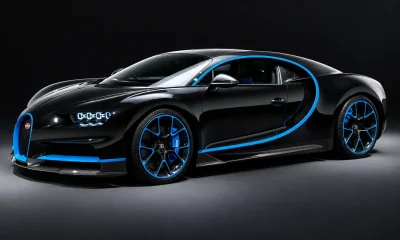

Zagreb's semi-official message to Podgorica: don't count on German pressure to succeedZagreb's warning to Podgorica, Karlo Ressler's harsh words and the happy ending of a missing Bugatti
Thirty-three years have been wasted – at least according to the advisor to the Croatian Foreign Minister, this is how much bad politics has cost Montenegro. At the Zagreb roundtable...

Kurti would immediately make Serbian students answer: Recognition of Kosovo is the first lessonKurti is singing his own tune, already demanding recognition of Kosovo, which the winning University List had previously rejected
Serbian university students haven't even formed a government yet, and Albin Kurti would already be making them answer questions. Recognition of Kosovo would be the first exam question, Milan Radoičić...


Kosovo avoids new elections at the last minuteHe became president of Kosovo three minutes after midnight, but lawyers say the election may still be valid
Justina Shiroka-Pula became the new president of Kosovo with 81 votes, while the results of the vote were announced just three minutes after the constitutional deadline...


Fico would dismantle Slovakia's Western federal systemFico attacks the 2003 Slovak EU referendum without evidence, also opens a debate about NATO
Robert Fico would rewrite Slovakia's European history: he believes the results of the 2003 EU referendum were falsified, even though he himself voted for accession at the time...


The Hungarian Alliance in Slovakia is preparing for parliament, but was even pushed back in the local electionsThe Hungarian Alliance lost 326 seats, but is still preparing for parliament
In Slovakia, everyone declared themselves the winner after the local elections – at least according to the statements of the parties. However, in the case of the Hungarian Alliance, the...


The government trembled in Fico's handsAfter Taraba's fall, it was not just a ministerial position that was at risk, but Robert Fico's parliamentary majority.
After thirty-three years, the Slovak parliament has once again ousted a minister, but the departure of Tomáš Taraba is only the spectacular part of what is a serious...


Defense money: Romania would buy American soldiersBucharest is ready to pay the "transatlantic tribute", as long as the American soldiers stay
Allied loyalty has been raised to a new level in Bucharest: Romania would now not only host American soldiers, but would also pay for them to...


Full power government with a six-month warranty periodPSD received ministerial posts, PNL and RMDSZ support from outside: Luca Niculescu's government was voted in
The Romanian parliament voted for the government of Luca Niculescu, but no one gave a guarantee of political peace. The PSD won twelve ministerial seats...
