
BA Balkanac
Possession and Obsession (FEST '26)Ustasa past, boycott and lifetime achievement award: Lordan Zafranović released another alligator into the Balkan swamp
Croatian filmmaker Lordan Zafranović has once again managed to open wounds that have never truly healed in the Balkans. His film Children of Kozara, which evokes the horrors of the Ustasha during World War II, not only disturbed historical memory at the Belgrade FEST, but also divided Serbian film society. While renowned directors called for a boycott of the festival, Zafranović received a lifetime achievement award, and his new film also won the award for best Serbian film. So history was once again on the screen, and the debate continued in the audience


The same story tells of three young men from Dubrovnik with not too thin wallets: the Croatian Niko, the Italian Toni and the Jew Miho. The three of them are excellent friends. Somewhere, just before World War II, they spend their time fencing, listening to music and having various carnival entertainments. It is no coincidence that Toni is in a love relationship with Niko's sister, and it seems that nothing can interfere with their fate when the war arrives and everything changes.
The fascist occupation completely changes everything: Toni surrenders to the Nazi ideology, Niko joins the partisans, while Miho tries to save that one orphan's life by escaping. So the bird of happiness, which is already somewhat tangled in its feathers, flies far away, the relaxed, almost comic tone is replaced by tragedy - in the film titled Occupation in 26 Pictures (Okupacija u 26 slika), which was directed by the Croatian LORDAN ZAFRANOVIĆ back in 1978.
His work was far from without resonance in the then still very much existing, multi-component Yugoslavia. The kind of raw, expressive naturalism with which Zafranović, as it were, conjured the cruelties of the Ustasha terror onto the screen, ruffled the nerves of almost everyone. He tore open old wounds that had never really healed. – In the lead role, the Serbian and Croatian sides could once again jump at each other's throats, so that the rest could not just be peaceful statistics. It became a great Kalamajka.
We won't go into how useful such a thing can be, to what extent, now. Art is an autonomous thing. Even if it depends on a lot of money, the filmmaker is also a sovereign figure, neither material nor spiritual resources should be used to obscure reality, but sometimes it is worth considering showing the unvarnished truth. The total-brutal exploration of our own cruel visions, undisguised to such an extent, as the Occupation in question was built on.
– Not only because we can be sure that our opponent (be it our compatriot, by the way) sees the same thing, we can take revenge on him, he sees it completely differently. He projects his own naked truth onto him, as it were, "projects" it.
Rather and better.

The film is about the atrocities of the Ustasa during World War II. So it raises a serious topic, which could give new impetus to national hatred in the The film is about the atrocities of the Ustasa during World War II. So it raises a serious topic, which could give new impetus to national hatred in the Balkans, especially in the current political moment. Even if Zafranović raises his hands, his responsibility can be caught red-handed (Source: X platform, Radio Beograd 2 )
Now, we have thrown all this here in such a hasty and highly debatable way because Zafranović - after many years - managed to stir up the waters that could easily lead to war, or at least to warfare, or at least to discord.
The annual Belgrade International Film Festival is also a no-go, as is the case with the theater parade, BITEF. Many believe that the government has also completely taken over the FEST, pushing its own people in, so something similar, but independent, is definitely needed. Until then, the only weapon is the BOYCOTT!

The director, who believes that the Ustasha have ruled Croatia since 1991, which fits with the current Serbian narrative
In this regard – showing the complexity of the situation – many prominent Serbian and Croatian, mostly opposition film people agree flawlessly, without any particular difficulty. In its own way, this represents a peculiar paradox, but it is so. As a result, such great directors, colleagues, friends and neighbors openly called on Zafranović to withdraw his work from the Belgrade event, such as Goran Marković, among others, Tito and I, or Srđan Dragojević, the father-creator of the film Beautiful Villages Burn Beautifully. – However, Zafranović did not listen to them, the festival began on the second day of this month – with his work to a solemn fanfare – and ended with an awards ceremony on Sunday evening, the 11th.
It should be noted that LZ can receive a LIFETIME AWARD in the framework of the series of events in question. Among his works that have a great impact on the country, of course, is this latest one, the film drama ARANYMETSZÉS 42 – KOZARA CHILDREN, which was screened for the first time at the aforementioned 53rd FEST in the once-common capital. It was here that the Croatian director came up with another “black cinema”, which he dedicated to the child victims of the Jasenovac death camp in World War II, and for which he allegedly waited for so long – with superhuman perseverance that could even be called obsession. (The latter, by the way, is not difficult to imagine.)
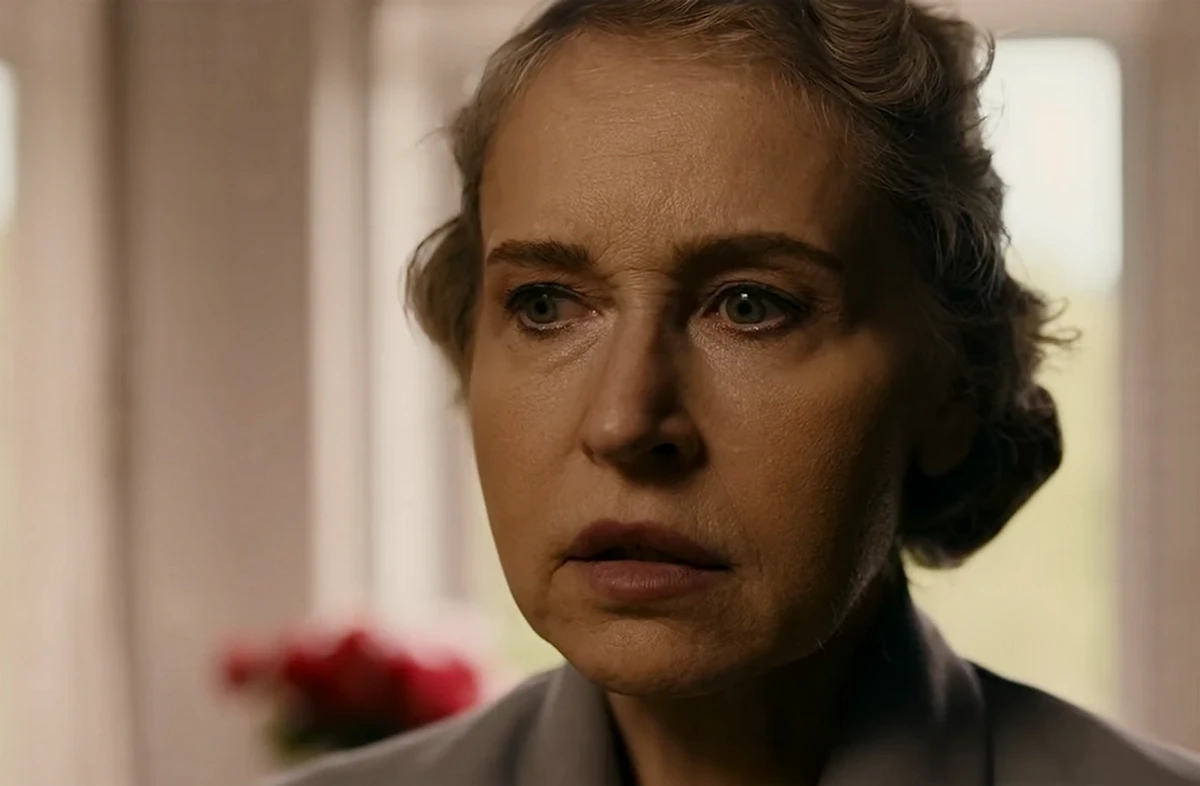
Anica Dobra as child rescuer Diana Budisavljevic, a Red Cross nurse (Source: Screenshot)
Briefly about the historical background of the film's plot, one of the most horrific scenes of the bloody battles of World War II in the former Yugoslavia was the Kozara Mountains in Serbian territory. Tito's partisans set foot there, but everything proved to be in vain. Joja, the machine gun legend, and his companions were unable to finally repel the attacking fascists.
Several partisan films have been made about this in the past, but that's not the point here. Children of Kozara is about the mostly Serbian children who were captured by the Nazis, mainly Croatian ustašas, during the Kozara purges, and then taken to the aforementioned Croatian camp. Where nothing but death awaited them.
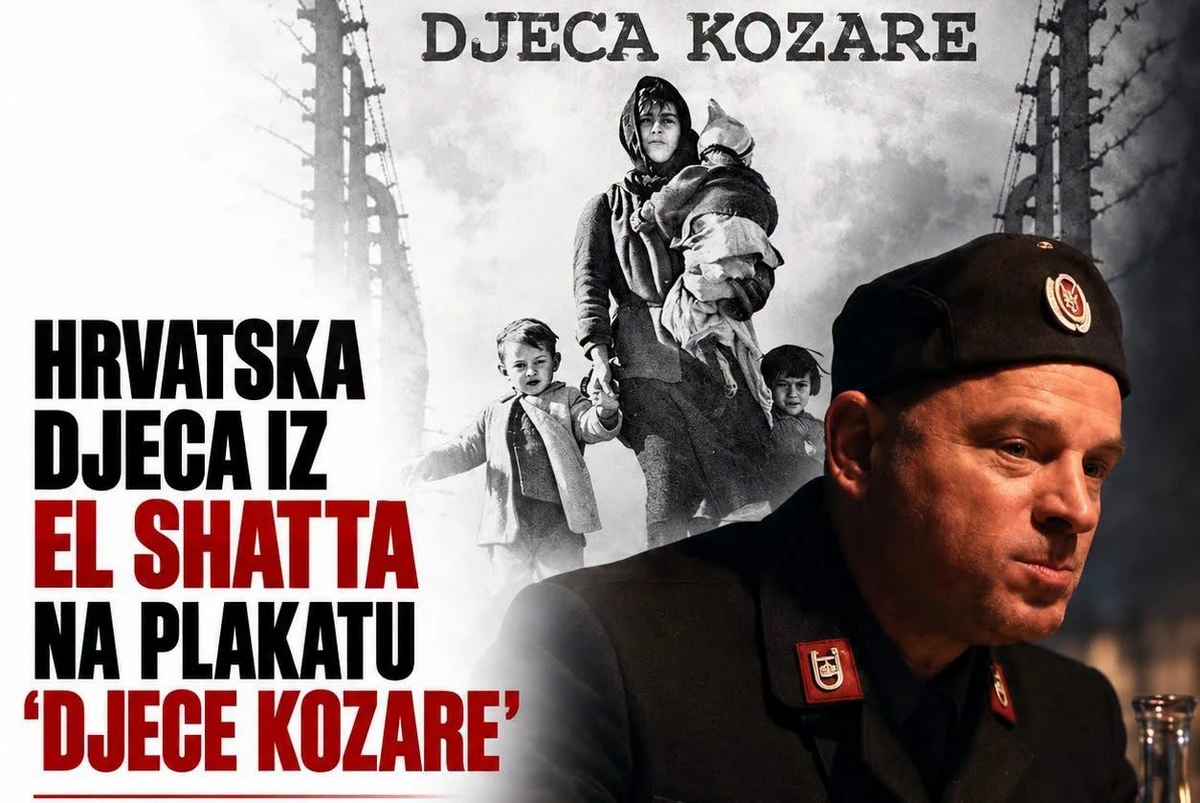
It is a very bad marketing move to promote a film about Serbian children from Kozara with a photo depicting Croatian children resettled in El Shatt, Egypt. According to reports, in the film, which was financed by Serbia and Bosnian Serbs, Rene Bitorajac, pictured, plays Vjekoslav Maks Luburić, a leader of the Croatian Ustasha movement during World War II and the commander of the concentration camps of the Independent State of Croatia (NDH).
However, a good part of them, about ten thousand of them, manage to escape. Because in this horror story, a figure appears – as if sent by the good heavens – to rescue them from the jaws of death. A real-life Red Cross nurse of Austrian origin, a certain Diana Budisavljević. (The family name of Tito's wife, Jovanka...) Diana not only devises the method of the operation, but also actively participates in it.

The point is that by mobilizing his acquaintances, who may be in higher positions of power, and occasionally forging written orders, he takes them, those poor little prisoners, far from Jasenovac, as if by group transfer, where they can find people to take them in among the better-feeling people. – Our aim here is not to continue the story of the film, because we could go on and on about what we have now simplified infinitely. Let's stop there.
(STOP! LOW ROLL. CUT/END.)
According to the announcement made at the festival closing ceremony on Sunday evening, which was similarly solemn to the opening ceremony, this year's Belgrade Winner is none other than the Spanish film Juan Pablo Salat: RED HANGAR. The award for best European cinema went to the Swedish film THE SILENT BEE directed by Magnus Carlsson. But who received the award for best Serbian film – otherwise known as the “Great Serbian Award”? The Milutin Čolić Award went to Lordan Zafranović for his film, which was mentioned above.
BALK Games
Choose a game and play right here on BALK!
Loading games…
The games are provided by GamePix. When you start the game, the content from the third-party provider is loaded.


VUČIĆ IS BACK: 103 minutes of speech, yogurt incident and VMSZ plan

They defeated Vučić, but can Serbian students govern?

A Serbian MiG-29 crashed near Ópazová: the pilot died

Serbian Parliament: What awaits Serbia after November 17?

Croatia's defense spending could exceed 2 billion euros next year

Vučić's Kosovo crisis general retires

Hereditary Republic: Will Igor Dodik be the Prime Minister?

Kurti would immediately make Serbian students answer: Recognition of Kosovo is the first lessonKurti is singing his own tune, already demanding recognition of Kosovo, which the winning University List had previously rejected

We ask for a beautiful smile! (but it can also be tearful) 🔞The grotesque world of the Kharkiv photography school, taboo-breaking artists and war images – also in Kragujevac

God's mills grind slowly: After 35 years, the first compensation was awarded to a victim of Serbian concentration campsSerbian prison camps: must pay after 35 years, Belgrade fears for state coffers

Serbia gets away with Kushner deal without punishmentTrump's son-in-law will not have a luxury hotel in Belgrade, and the Serbian state can avoid a 50 million euro compensation claim

Pásztor would bury the hatchet, Fremond would have coffee, Góli is looking for his hatThe campaigns are over, the VMSZ senior leadership does not want to see enemies, but cooperation with the Tündi-Bündi opposition

Fake 500 euro notes in the vault(?), real Russian depositors in pickleIt is not yet certain that there were any fake 500 euro notes, but it is certain that thousands of Russian depositors got into trouble.

Vučić's concrete empire is cracking: arrest warrant issued against the owners of Millennium TeamThe police were delayed, and the lawyers were requesting an exclusion, so the authorities were unable to arrest the leaders of the Millenium Team


Sputnik: Hungary may pay dearly for giving up Russian energyMoscow is warning of price increases, and according to Sputnik, the Hungarian economy could also be affected.
The price of giving up Russian energy is already being calculated in Belgrade and Moscow. According to Sputnik Serbia, Hungary will face more expensive gas, uncertain oil supplies and...


Balázs Orbán defends Informer: he sees "authoritarian liberals" already in BelgradeBalázs Orbán defends Informer while Serbian media authority investigates channel's behavior
The Hungarian-Serbian political friendship persists even after the election defeats, and has now extended to saving Informer TV. Orbán...


THE BATTLE OF THE LOSERS: Vučić, Dodik and Pásztor friendship with OrbánAfter Orbán's visit to Belgrade, Vučić would once again take up the SNS presidency in a "sign of renewal"
Voters have rewritten the political map, but Viktor Orbán is still working from the old address list. On his Balkan tour, Milorad Dodik, Pásztor...


We ask for a beautiful smile! (but it can also be tearful) 🔞The grotesque world of the Kharkiv photography school, taboo-breaking artists and war images – also in Kragujevac
Ukrainian photography is not known for always showing the world as beautiful. From the grotesque images of the Kharkiv School to the fringes of society...


After the Moments of Fall (drama, with a happy-sad twist)Vučić announced defeat, then sang Rosemary. Arthur Miller's drama provides the encore and the impact
Aleksandar Vučić and the Serbian Progressive Party had a strange evening after the Serbian elections. The announcement of the defeat was met with stunned silence, then...


Books have their own problems too.The 69th Belgrade Book Fair has opened, but will soon close, and will be open for a week.
The 69th Belgrade Book Fair is still waiting for readers despite the boycott by several major Serbian publishers. This year's guest of honor is Tunisia, the...

VUČIĆ IS BACK: 103 minutes of speech, yogurt incident and VMSZ planThe Serbian parliament has been formed, and it seems that it may have a Hungarian vice president, but not from the ranks of the deposed VMSZ
The Serbian parliament has convened in a new composition, but Aleksandar Vučić is apparently not prepared to play the role of silent opposition. The former head of state immediately...

They defeated Vučić, but can Serbian students govern?Students want to end the close defense cooperation with Israel established during the Vučić era
Serbia's student movement has won a historic election victory, but governance presents it with new challenges. The New York Times, November...

Croatia's defense spending could exceed 2 billion euros next yearCroatian army receives record amount of money, but missile defense development is hampered by political obstacles
The Croatian army will be able to manage with more money than ever before in 2027, but one of the most important elements of the armament plans, modern missile defense, will still be...


JANAF has a little hole, the Hungarian and Croatian Speakers met in BratislavaDamage to JANAF's oil pipeline resulted in the release of 500 cubic meters, or half a million liters, of oil into the environment.
The damage to the JANAF oil pipeline in Croatia resulted in half a million liters of oil being released into the news, which at first glance sounds quite alarming. In cubic meters, this is only...

Hereditary Republic: Will Igor Dodik be the Prime Minister?Milorad Dodik can now prepare the position of Prime Minister for his son
Milorad Dodik's son is a candidate for the post of Prime Minister of the Republika Srpska in Bosnia, but others in the SNSD also claim the position,...


Croat-Bosnian (v)horrors: endless games in MostarMostar remains divided, conflict follows conflict 33 years after the destruction of Stari Most
Stari Most has been reconnecting the two banks of Mostar for more than twenty years, but the gap between the two communities continues to...


Đukanović to Belgrade: Will Serbia have a government, or will the Serbs of the region?Former Montenegrin President Milo Đukanović urges Serbian political change in Cetinje, while Lajčák also returns
Twenty years after Montenegro's independence was restored, Milo Đukanović once again appeared in public in Cetinje to take stock of the country's past...


Proceedings against Montenegro over Pljevlja remain openSeventy million euros have already been spent, but the case has not been resolved, and the Pljevlja coal-fired power plant is a stumbling block on Montenegro's path to the EU.
Montenegro is already on the threshold of the European Union, but the chimney of the coal-fired power plant in Pljevlja continues to send smoke signals to Brussels. The seventy million euro...

Vučić's Kosovo crisis general retiresThe retired chief of staff was a key figure in the Kosovo crises and Vučić's military policy
It was necessary to flex our muscles towards Kosovo and negotiate sensibly with KFOR: Milan Mojsilović spent eight years trying to reconcile military realities with Aleksandar...

Kurti would immediately make Serbian students answer: Recognition of Kosovo is the first lessonKurti is singing his own tune, already demanding recognition of Kosovo, which the winning University List had previously rejected
Serbian university students haven't even formed a government yet, and Albin Kurti would already be making them answer questions. Recognition of Kosovo would be the first exam question, Milan Radoičić...


Fico would dismantle Slovakia's Western federal systemFico attacks the 2003 Slovak EU referendum without evidence, also opens a debate about NATO
Robert Fico would rewrite Slovakia's European history: he believes the results of the 2003 EU referendum were falsified, even though he himself voted for accession at the time...


The Hungarian Alliance in Slovakia is preparing for parliament, but was even pushed back in the local electionsThe Hungarian Alliance lost 326 seats, but is still preparing for parliament
In Slovakia, everyone declared themselves the winner after the local elections – at least according to the statements of the parties. However, in the case of the Hungarian Alliance, the...


The government trembled in Fico's handsAfter Taraba's fall, it was not just a ministerial position that was at risk, but Robert Fico's parliamentary majority.
After thirty-three years, the Slovak parliament has once again ousted a minister, but the departure of Tomáš Taraba is only the spectacular part of what is a serious...


Defense money: Romania would buy American soldiersBucharest is ready to pay the "transatlantic tribute", as long as the American soldiers stay
Allied loyalty has been raised to a new level in Bucharest: Romania would now not only host American soldiers, but would also pay for them to...


Full power government with a six-month warranty periodPSD received ministerial posts, PNL and RMDSZ support from outside: Luca Niculescu's government was voted in
The Romanian parliament voted for the government of Luca Niculescu, but no one gave a guarantee of political peace. The PSD won twelve ministerial seats...
