
Serbia
The Serbian media authority failed the first testREM was back in the spotlight ahead of the campaign, but the old problems of the Serbian media space remained
As the Serbian elections approach, it has once again become clear that it is not easy to “manufacture” an independent media authority in Serbia. In the first serious test of the newly established REM, four council members changed their minds in just two hours, so Informer TV was ultimately excluded from election monitoring. What happened between ten and twelve o’clock has not yet been explained by anyone – but it has been proven that the old problems have also migrated to the new body.


As the Serbian elections approach, the old question of where information ends and propaganda begins during the campaign has resurfaced. Following the latest crackdown by the Serbian media authority, it is not easy to provide a reassuring answer.
The new Serbian media authority had barely been established when it failed its first test, causing quite a scandal. All eight members of the Electronic Media Regulatory Board (REM) wrote in support of the need to continuously monitor the election programs of Informer television, but a few hours later, four voted against their previous position.
Due to the 4:4 result, the extremely pro-government Informer television, one of the largest broadcasters, known for its defamatory campaigns and manipulative content, was left out of the election monitoring, while the authority is monitoring eleven channels 24 hours a day, from Serbian public television and Vojvodina RTV to Pink and N1.
There is no clear answer to what happened in those two hours – but there is one thing that is clear: the case is not just about Informer. The question is whether the Serbian media authority, which has been struggling with a credibility crisis for years, can truly act as an independent regulator at a time when it is needed most during the election campaign.
Unfortunately, we already know that the answer is negative. Moreover, the reason for the indecisiveness is that the ninth, minority member, who would have been delegated by the Vojvodina Hungarian Association in the first round, was not elected.
There were problems even at the time of its formation
The story begins with the new Serbian media law. The mandate of the former REM council members expired in November 2024, but the parliament did not complete the election of the new body on time. The European Commission later separately found that Serbia had not met the deadline set by the law, creating a regulatory vacuum.
This is important for the current case because the independence and effective functioning of REM has already been a key issue in the Serbian elections. The ODIHR, in its report on the 2023 parliamentary elections, wrote about media distortions and specifically recommended that the independence of REM be ensured and that the authority proactively address violations revealed during its own systematic media monitoring.

The first selection process was controversial, so a new call for applications for the election of REM council members was launched on 28 April 2025. This coincided with the two-week blockade of the RTS building by protesting university students, whose demands included the regular election of the REM council. According to the European Commission's 2025 Serbia Report, the first process was accompanied by reports of irregularities, while the second process continued with international mediation.
The parliament finally elected the members of the council on November 12, 2025, but the nine-member body only had eight members. This is important for the current story because it essentially formed two groups of four. One included Dubravka Valić Nedeljković, Ira Prodanov Krajišnik, Mileva Malešić and Rodoljub Šabić, while the other four members were Miloš Garić, Stevica Smederevac, Milan Petković and Snežana Miljković.
Valić Nedeljković, Prodanov Krajišnik, Malešić and Šabić submitted their resignations in December. The immediate prelude to this was the dispute over the council member nominated by the national minorities – in fact, at the request of the VMSZ, the candidate was not elected because it was not István Bodzsoni, who was supported by the VMSZ and the majority of the national councils.
The four members set a deadline for parliament to sort out the procedure, and when this did not happen as they expected, they left. Thus, REM became practically inoperable again.
On July 10, 2026, the parliament adopted an “authentic interpretation” of a provision of the Electronic Media Act, according to which the previous resignation of the four members had no legal effect. The council remained composed of eight members.
The new council failed to elect a president at its inaugural meeting either. They succeeded on the second attempt, with the openly pro-government Stevica Smederevac becoming president.
The list was not expanded, Informer can still do what it wants
Then came the first meeting, which was actually a test to see if REM would stand its ground, if it would manage to complete its task, or if we once again got a body that actually made no sense.
The question was whether the pro-government Informer would be included in the list of channels monitored during the election campaign? Of course, in the end they didn't, REM failed the test. It seems that Informer is untouchable, at least for now.
At the meeting, all eight members stated in writing that Informer should be included in the monitoring. Until ten o'clock, it was still clear that Informer should be among the monitored channels. Then something happened between ten and twelve o'clock, which caused four members to change their minds, but Stevica Smederevac did not elaborate on what exactly.
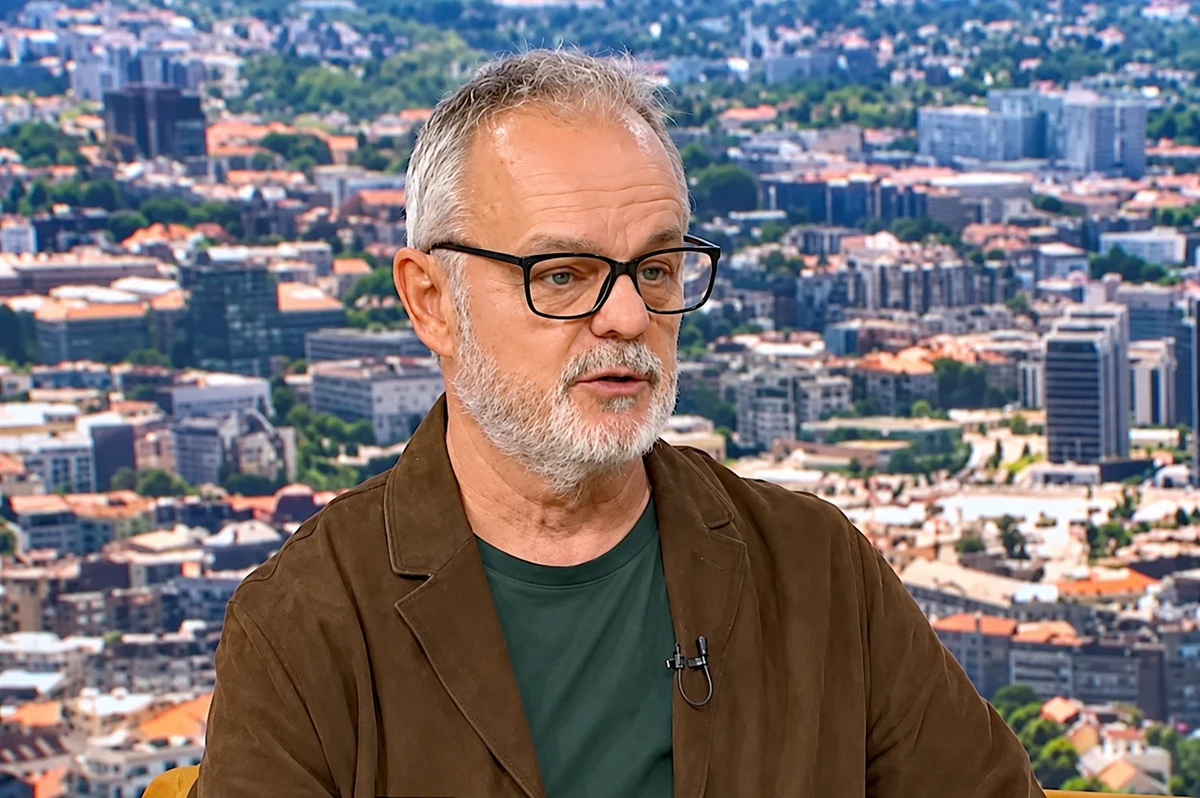
This is Stevica Smederevac, who also managed to make a 180-degree turn in two hours. Smederevac worked for more than a decade at Novi Sad Television, of which he was also the director between 1998 and 2000. At that time, the institution operated as a voivodeship unit of the Belgrade-based Radio and Television of Serbia (RTS), preserving certain regional characteristics – primarily multilingual programming. According to his own admission, he organized the operation and “dislocation” of Novi Sad Television during the 1999 NATO bombings, when the Mišeluk television center was also destroyed (Source: Sreenshot, RTS )
He explained the decision by saying that the REM professional service does not have the capacity to monitor those on the expanded list. Of course, we all know what the real reason behind it might be. In the end, four independent candidates supported including Informer in the monitoring, while the other four members of the REM Council voted against it.
“It is simply unbelievable that four people vote against what they themselves previously proposed. I think the only explanation for this is that there was an order from above. These are not autonomous or independent REM council members, but obedient executors who change their own opinions overnight,” said Rodoljub Šabić, an independent member of the REM Council.
Miloš Garić, a member of the REM Council close to the government, explained that he ultimately voted no by saying that he did not want to participate in any chase for anyone.
Ivana Stevanović, an employee of the Slavko Ćuruvija Foundation, said in this regard that it is simply unbelievable that putting a television station under surveillance would mean putting that television station in the crosshairs. Does this mean that the eleven television stations already monitored have also been put in the crosshairs?
Under the "magnifier" of REM, RTS, RTV, Pink, Prva, B92, Happy, as well as N1, Nova S and K1 television stations will be "in the crosshairs".
A party proposed the monitoring of Pannon Television
The inclusion of Pannon RTV in the election monitoring was requested by the Vojvodina Social Democratic League – Vojvodina. The LSV requested that REM “immediately begin extraordinary and continuous monitoring of the television and radio programs of Pannon RTV Subotica.”
Marton justified the request by saying that, in their opinion, the Pannon program, founded by the Hungarian National Council, is a program of the Vojvodina Hungarian Association and Pásztor Bálint is subordinated to political popularization.
REM President Stevica Smederevac himself confirmed after the September 28 meeting that new requests had been received from political actors to expand monitoring, and he specifically mentioned Pannon TV, which broadcasts in Hungarian, as an example. However, there will be no monitoring in the case of Pannon either.
Conflict of interest for some members
Valić Nedeljković also raised the issue of a possible conflict of interest of REM board member Miloš Garić, pointing out that he had previously worked with the owner of Informer, Dragan J. Vučićević, on several occasions. His colleague Garić worked with Dragan J. Vučićević at Nacional between 2001 and 2003. After that, they both moved to Kurir between 2003 and 2005. That is, they followed each other. Then, from 2005, they both worked at Press.
Garić was a guest on the Informer program twice a week during the summer, and these were friendly conversations. Valić Nedeljković also reminded that in previous election cycles Al Jazeera was also included in the monitoring, but in the meantime it was removed, meaning that a place had definitely become free.

“The question rightly arises: why Informer and not the 449 media providers mentioned by my colleague Stevica Smederevac? Simply because there are clear signs that Informer is violating the rules.
"It has received a certain license for cable broadcasting, but now - by buying up local media - it is also bringing its program to an audience that its license does not cover," the REM member reminded, adding that the other day he watched the Informer program for only half an hour, and during that time he wrote down ten phrases that should not be uttered in the media space.
He also pointed out that REM has received 131 complaints over the past year about content broadcast by Informer, putting the channel at the top of the list along with Pink Television.
According to him, everything has nothing to do with politics. By joining REM, they undertook to create an atmosphere in which the law and the code of ethics are respected, and from which hate speech is excluded. It is safe to say that this will not succeed. At least not during the current campaign period.


What criminals did Vučić pardon before he resigned?

"Stop this shit!" Greenpeace tells Ukrainian chicken king

After the flamingos, students also rebelled against Edi Rama

Serbia's demographic miracles at election time

Ten years in power: Plenković's year-end speech

Could the US ambassador in Athens have helped overthrow the Romanian government?

The number of victims of the August Omiš fire has risen to five

Dodik already feels that Vučić will winDodik already feels Vučić's victory, and the police ensured the calm of the campaign rally in Zrenjanin

The secret services also moved for Rybar, he would return to the BalkansFive Russians, a confiscated drone kit and some influential Moscow supporters – a strange film shoot in Montenegro

Waste-to-energy plants: Croatia plans four facilitiesGarbage can be used to generate energy, but the most heated debate has centered around Croatia's waste policy.

Croats and Serbs Collaborate in Bosnia-HerzegovinaDodik and Čović, teaming up, would reshuffle power from ambassadorial posts to secret services

Is the independent election observer the Vučićs' biggest enemy?The authorities are attacking independent election observers, while the CRTA continues to count irregularities

Janaf is not lost, it is only transformed.Croatia would build a new energy giant, and MOL will slowly be forced to get used to the idea

The Rybar got caught in the Montenegrin netMontenegrin secret service arrests five Russians, while Moscow is already talking about a prisoner exchange


Orbán, Captain, the boss, the pressure cooker and the cupbearerThe Adriatic oil pipeline brought Hungarian and Croatian ministers together in Zagreb, while Serbia received a political warning from Split.
Hungary and Croatia discussed the capacity of the Adriatic oil pipeline, the Krk LNG terminal and a joint gas field in Zagreb. Meanwhile, the MED9 Split Declaration...


Why are Hungarians afraid to let passengers on the Falcon?The Falcon would fly, but without passengers for now: Hungary is testing the Belgrade-Budapest high-speed railway
A lot can happen to a railway line in seven months, especially if there is a change of government at one end, the...

The last eight years of Ernő Kiss reflected in his lettersThis is not your usual October 6th commemoration, this time we will show you something that the reader will not have access to anywhere else.
On October 6th, we remember the martyrs of Arad, but this time we are not telling the story of Ernő Kiss' execution. A photograph of him, only fifty years old, has been found...


Possession and Obsession (FEST '26)Ustasa past, boycott and lifetime achievement award: Lordan Zafranović released another alligator into the Balkan swamp
Croatian filmmaker Lordan Zafranović has once again managed to open wounds that have never truly healed in the Balkans. With his film Children of Kozara,...


Marina, Marina, Marina (for MV's final farewell)A Marina, a Vysotsky, a few films and a Whistle – the story of a world star with Hungarian detours
The name Marina Vlady evokes an entire era: French films, Cannes, Miklós Jancsó and Márta Mészáros, and above all, Vladimir Vysotsky. But...

Fool's Tale: Do You See, Hear – Do You Cut? (Bicskei & Bakos in Fonó)A fairy tale from the steppe, world music from Fonó – a joint evening between Zoltán Bicskei and Árpád Bakos
Sometimes the fool of the plain rolls all the way to Fonó in Budapest, and he doesn't even need legs to do it. Zoltán Bicskei...
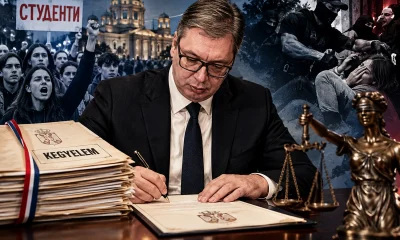
What criminals did Vučić pardon before he resigned?Forty-nine names, so many question marks: the law was also a supporting actor in Vučić's pardon policy
It is still unknown who, apart from the activists from Novi Sad, will escape the court proceedings against them - it may be serious...
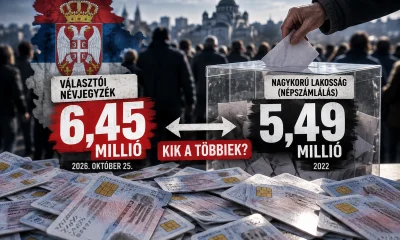
Serbia's demographic miracles at election timeSix and a half million voters, six and a half million residents – Who is really on the Serbian voter register?
Ten days before the Serbian elections, it became clear that the number of voters was slowly catching up with the total population, and if Serbs...

"Stop this shit!" Greenpeace tells Ukrainian chicken kingGreenpeace sent a message to the Ukrainian chicken king on a five-hundred-square-meter area near the Hungarian border
This time, Greenpeace activists didn't try to draw attention to themselves with a petition or a polite letter: they expressed their opinion on five hundred square meters in a Croatian...
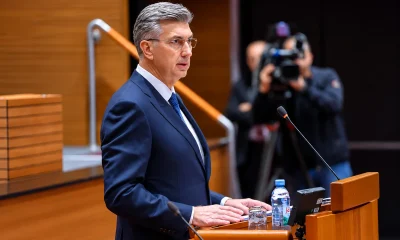
Ten years in power: Plenković's year-end speechThe opposition withdrew, and the Croatian Prime Minister responded with numbers: wages, pensions, GDP and inflation
Croatian Prime Minister Andrej Plenković gave his annual review to a rather ungrateful audience this time, after the opposition walked out of the...

Croats and Serbs Collaborate in Bosnia-HerzegovinaDodik and Čović, teaming up, would reshuffle power from ambassadorial posts to secret services
After the elections in Bosnia and Herzegovina, it is slowly becoming clear that the winner will not necessarily be the one who receives the most votes, but the one who...


Bosnian elections: the Komšić era is over, but the Dodik era continuesThe Bosnian Croats took back the presidency, with a dominant victory for the Serbs and a close victory for the Bosniaks.
Bosnia and Herzegovina elections 2026: one of the most important results of Sunday's elections is that with the victory of Darijana Filipović, Croats regained the seat they lost...


Pandora winks back, more than a corruption case?Can the former Montenegrin president and his son break champagne on the fifth anniversary of the Pandora Papers?
In five years, governments in a country can fall, political systems can change, and even the gates of the European Union can get closer...
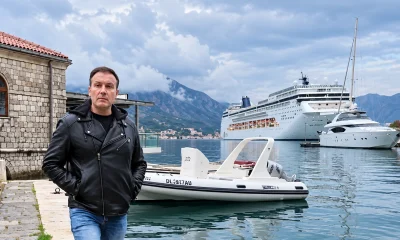
The secret services also moved for Rybar, he would return to the BalkansFive Russians, a confiscated drone kit and some influential Moscow supporters – a strange film shoot in Montenegro
Montenegrin authorities have expelled Mikhail Zvinchuk, the founder of the Russian information network Rybar, and four of his associates, citing a national security risk. The Belgrade...
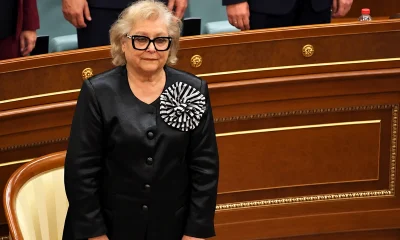

Kosovo avoids new elections at the last minuteHe became president of Kosovo three minutes after midnight, but lawyers say the election may still be valid
Justina Shiroka-Pula became the new president of Kosovo with 81 votes, while the results of the vote were announced just three minutes after the constitutional deadline...


Vučić's speech: according to Informer, this is what the whole world was waiting forVučić set the world straight in New York, and Informer strengthened with dad and mom
Aleksandar Vučić gave what may be his last major presidential speech at the UN. In addition to Kosovo, NATO and Croatia, Informer took care of the...
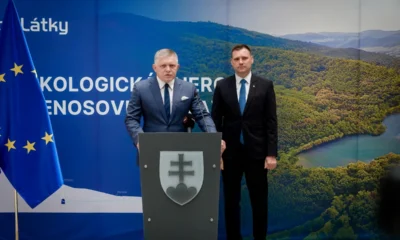

The government trembled in Fico's handsAfter Taraba's fall, it was not just a ministerial position that was at risk, but Robert Fico's parliamentary majority.
After thirty-three years, the Slovak parliament has once again ousted a minister, but the departure of Tomáš Taraba is only the spectacular part of what is a serious...


Fico would improve irrigation, but would not take water from HungarySlovak irrigation with Arab money: one of Slovakia's greatest treasures is hidden under the Csallóköz
According to Robert Fico, Slovakia needs to retain more water due to the severe drought, but it is not in its interest to...
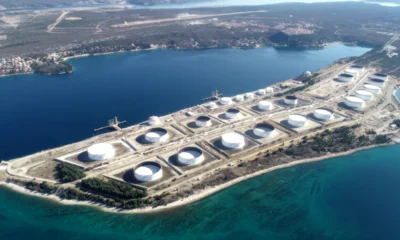

Janaf delivers two million tons of crude oil to MOLJanaf and MOL have reached an agreement: they signed a contract for the transport of slightly more than two million tons of crude oil
The agreement operates on the "take-or-pay" principle, meaning that the Hungarian oil company pays for the contracted transportation capacity even if it...

Could the US ambassador in Athens have helped overthrow the Romanian government?A scandal broke out in Washington, and an elegant restaurant dinner could cause headaches in Bucharest
US Ambassador Kimberly Guilfoyle's diplomatic career came to an ugly end, but the ripples of the scandal have reached beyond Athens. In Washington, influence peddling...
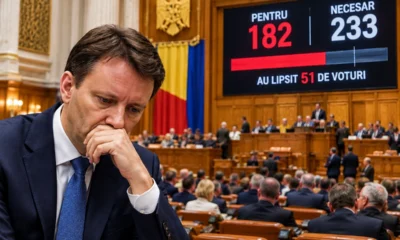

Romanian president rules out early electionsThe Mureșan government has fallen, but the president would not allow early elections in Romania just yet
According to the letter of the constitution, early elections should be held in Romania, but the head of state prefers to read between the lines. Siegfried...
