
Slovakia
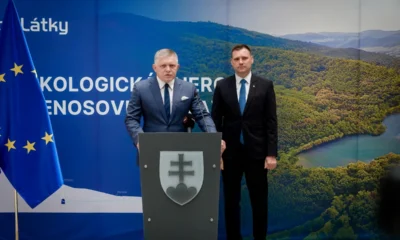
The government trembled in Fico's handsAfter Taraba's fall, it was not just a ministerial position that was at risk, but Robert Fico's parliamentary majority.
After thirty-three years, the Slovak parliament has once again overthrown a minister, but the departure of Tomáš Taraba is only the spectacular part, which could have serious consequences. Robert Fico has so far held his fourth government together with functions, deals and some political glue, but now it has become clear that even the glue will not last forever. The next big test will be the budget, and in the background the question is already looming: will Slovakia really reach early elections?

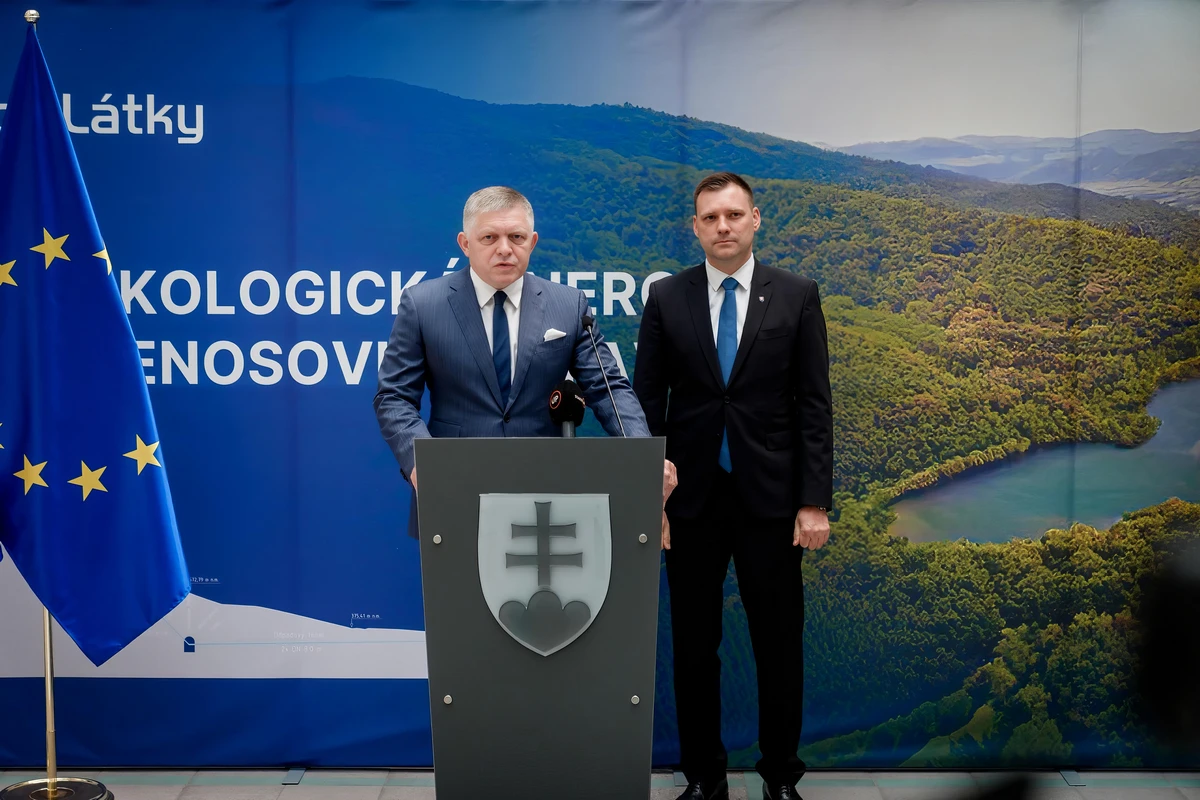

It has been 33 years since a vote of no confidence was taken from a minister in the Slovak parliament. By ousting its own minister, the Slovak National Party (SNS) forced not a simple change of leadership, but an open parliamentary showdown, but whether there will be early Slovak elections.
Robert Fico has so far dealt with the coalition's internal rebellions with functions, deals, and stalling, but the replacement of Tomáš Taraba has shown that behind the Slovak government there is no longer a disciplined majority, but small power centers that are blackmailing each other and going their separate ways.
The smallest government party put Robert Fico’s fourth cabinet in jeopardy when the Slovak parliament voted 77 votes in favor of Environment Minister Tomáš Taraba on September 29. Taraba was on paper the candidate of Andrej Danko’s SNS, but it so happened that seven SNS MPs voted together with seventy opposition members. The other two government parties, Smer and Hlas, and their smaller groups, walked out of the chamber rather than participate in the scene.
Robert Fico, the leader of Smer-SD and prime minister, threatened last Sunday that if Danko and Taraba break the parliamentary majority, early elections could be called in January. On Monday, he asked the president to withdraw his previously submitted proposal to dismiss Taraba, which his coalition partner had requested from him under the coalition agreement. A day later, however, the SNS, with the help of the opposition, carried through in parliament what Fico did not want to undertake.
The SNS was not a unified party even at the start
The SNS did not return to the legislative body with a classic, disciplined party faction even in the last parliamentary elections in 2023. Andrej Danko put together a nationalist collective list, which was framed by the party's name and organization, but the list included politicians, smaller platforms, and actors known from the conspiratorial media world who had their own ambitions and their own audience.

Tomáš Taraba came from the small party Život – Národná strana (Life – National Party). Before that, in 2020, he entered parliament on Marian Kotleba's far-right ĽSNS list, but soon left its faction (the party has since also disintegrated, but Republika, which rose from its ashes, is currently the third most popular party in Slovakia).
On the 2023 SNS list, Taraba received barely fewer preference votes than the list leader Danko himself, but it should be noted that a later supporting actor, Rudolf Huliak, president of the Národná koalícia (National Coalition) and mayor of Nagyócsa (Očová), also obtained an extremely strong personal mandate.
The list therefore did not reflect the internal ranking of a party, but rather a temporary truce between several nationalist micro-communities. Danko later feared that Taraba's strengthening within the party could tear the SNS apart. This fear was not unfounded. Taraba is still not a member of the SNS, although he was its candidate for minister.
The Hulia Blues have already shown in advance how to keep Fico in check.
The current conflict had a prelude. In the fall of 2023, Rudolf Huliak was originally nominated as Minister of the Environment, but then-President Zuzana Čaputová did not appoint him. According to the official explanation, there were constitutional and legal concerns about the candidate, which made him ineligible for the portfolio. Instead of Huliak, Taraba was eventually given the ministry.

In the fall of 2024, Huliak, Ivan Ševčík and Pavol Ľupták left the SNS faction. The club would have been reduced to seven members, while a parliamentary faction requires at least eight members to function. Fico's party, Smer, therefore "lent" MP Dušan Muňko to the SNS so that Danko's faction would remain alive on paper.
Fico bought time at the time, but he did not solve the problem. The SNS rebels later received their political reward: Huliak became Minister of Tourism and Sports as a Smer candidate in 2025. The Prime Minister maintained the majority by giving something to every dissatisfied group, but in such deals, every new concession is also an invitation to the next blackmailer.
Danko's situation was particularly frustrating. In 2024, he also wanted to take the parliamentary speaker's seat, which had been vacated by Peter Pellegrini, who was elected president of the republic, although according to the coalition agreement, the position was Hlasé's. The speakership was eventually awarded to Richard Raši in March 2025, and Danko became only a deputy speaker.
Taraba was not a quiet minister
Taraba did not use the environment portfolio as a background position. From bear shootings to national park zoning to major energy and water projects, he brought issues that could appeal to rural, sovereignist, and state-centric right-wing voters at the same time. In his political self-image, he was not a green minister but a development policy manager who argued that he would bring money and infrastructure to the regions.

The Hungarian aspect of his policy is that in November 2024, he asked György Gyimesi, who became a parliamentary representative of the OĽaNO movement led by Matovič, who was elected prime minister in 2020, and later participated in the further disintegration of the largest Hungarian party in Slovakia, the Szövetség (now the Hungarian Szövetség), to coordinate the canalization projects in southern Slovakia. According to the ministry, Gyimesi's task was to maintain contact with the southern settlements and prepare the investments.
Danko formally attacked Taraba for making decisions without consultation, taking credit for successes and leaving risks to the SNS. The SNS also objected to the zoning of national parks, wind farms, battery factories, pumped storage reservoirs, the issue of illegal wells and the ministry's foreign trips.
According to Taraba, Danko received all the important information, and he managed the portfolio economically and transparently. In the parliamentary debate, he openly criticized the party chairman that the source of the conflicts was Danko himself, who was previously preoccupied with the Speaker's chair and then with Pellegrini.
Fico sought balance, then lost it
In May, Fico reached a compromise with Danko and Taraba, stating that if they did not resolve their relationship by the end of September, Taraba would leave. On September 15, the prime minister submitted the dismissal proposal to President Peter Pellegrini at the request of the SNS. In the meantime, however, he publicly praised Taraba's work and said that he found it difficult to understand why a minister who, in his opinion, had done a lot of work should be dismissed.
When Taraba announced that he would become an autonomous representative upon returning to parliament and would not automatically vote yes to all coalition proposals, Fico recognized the danger, as the three governing parties had already had to negotiate with smaller groups and independent representatives in order to secure a majority.
On September 25, Fico demanded guarantees from the SNS and Taraba that the parliamentary majority would remain functional, and since he did not receive any, he withdrew the dismissal initiative. This happened on Monday. Danko responded by saying that the prime minister had violated the coalition agreement, and on Tuesday he brought in the heavy artillery in parliament. Fico had always said in previous crises that the SNS could decide on its own ministers – and now he did.
Seventy-seven yeses, and a much bigger question mark
Michal Šimečka, the leader of the largest Slovak opposition party, the liberal Progresívne Slovensko (Progressive Slovakia ), sensed the moment. He called on all opposition parties to have all their representatives in the chamber for the vote, not to play tricks, and to immediately put Taraba's confidence motion on the agenda.
Seventy opposition members were present, joined by seven SNS members. Smer and Hlas withdrew, Peter Kotlár from SNS and Dušan Muňko, who had previously “devolved” from Smer, were absent, and representatives of Huliak’s former group also did not participate in the vote. All 77 members in the room voted to replace Taraba.
The President of the Republic has already indicated that he will dismiss Taraba after receiving the parliamentary vote of no confidence. The fate of the ministry is therefore decided in the short term, but the political dance continues. Taraba will return to parliament, but he will not be bound by party discipline. He did not say that he will vote with the opposition on everything, but that he will decide on a law-by-law basis, effectively announcing his veto potential.
The budget will be the real test
After the Taraba affair, the 2027 budget will be the coalition's last major test of strength. The draft must be submitted to parliament by October 15, while the government has already struggled to negotiate on the deficit, new austerity measures, taxes and pre-election distribution demands. The budget debate was one of the coalition's most underrated issues even before Taraba returned to parliament.
The government could theoretically have the necessary 76 votes out of 150 without Taraba, but “it’s there on paper” and “it’ll actually pass” are increasingly becoming the same thing in Slovakia. The Hulia Blues, the MPs who previously left Hlas, the internal divisions within the SNS and now Taraba’s autonomous vote mean that every substantive law is a separate deal. And a budget is not just about numbers; every ministry, party chairman and support group wants to see their own victory in it.
Although Danko claimed that the SNS supported the coalition after the vote against Taraba, the coalition agreement was severely undermined when seven of the party's representatives publicly voted with the opposition. Taraba only needs to bring in two former ruling party representatives to form a government and the government's majority will be gone, and according to Taraba, Peter Slyško, a Hlas representative, will leave his faction, although Slyško himself has said that he supports Taraba's policies and cooperates with him on regional issues.
Fico's task now will be to get the budget passed without having to hand out new ministries, state-owned companies or political concessions for every uncertain vote - as these could come at a cost in next year's election. But in which month will the elections be held?
Slovak elections: January or September – who would benefit from what?
Fico's statement on Sunday about early elections in January was a strong political threat, and despite his claim that his party, unlike the other ruling parties, was prepared for it, he currently has no ready plan for it. Shortening the parliamentary term requires a constitutional majority, the votes of 90 MPs.
A January election would only be realistic if Fico's Smer and the opposition were to support shortening the term and implement it very quickly. In other words, the prime minister has the strongest card in his hand, but it would not be easy to pull it out of the deck.
For Danko, the January vote is particularly risky. In September, the SNS did not reach the 5% threshold in any major poll: the latest Ipsos model put it at 2,2%. It is no coincidence that Danko called Fico's threat a bad joke. Hlas is currently being measured in parliament, but its support is decreasing almost month by month and is slowly but surely approaching the 5% parliamentary threshold.
Despite the fall of SNS and the weakening of Hlas, the possibility of a 5th government of Smer and Fico is not completely ruled out, as the far-right Republika is already in third place in almost all surveys. In fact, in one opinion poll it came close to Smer within the margin of error. For now, these tendencies raise a theoretical but interesting question: would Fico hand over the reins of government if Republika were to overtake him in the race, but this would ensure the establishment of a national sovereignist, pro-Russian government.
The opposition seems to have a better chance of winning an early election, but a lot depends on how many parties and which ones cross the parliamentary threshold. Of course, the Slovak political spectrum always brings surprises, and the question is which of the small parties, such as the Hungarian Alliance, will emerge victorious during the campaign.
Taraba has several options. He could regain influence over his former party (Život – Národná strana), but cooperation with the formation called Brothers of Slovakia (Bratia Slovenska), founded by Peter Pčolinský, has also been discussed. There are rumors that he will be included on the Smer or Hlas lists with some of his followers (e.g. Gyimesi), while the door to Republika is rather closed to him. Taraba denies all these reports or does not comment.
So the government was shaking in Fico's hands not because it lost an environment minister, but because everyone could see on September 29th: the prime minister no longer commands his own coalition, he is at most trying to keep it together.


"Stop this shit!" Greenpeace tells Ukrainian chicken king

After the flamingos, students also rebelled against Edi Rama

Serbia's demographic miracles at election time

Ten years in power: Plenković's year-end speech

Could the US ambassador in Athens have helped overthrow the Romanian government?

The number of victims of the August Omiš fire has risen to five

The execution of Nova.rs: new editor-in-chief or severance pay

Dodik already feels that Vučić will winDodik already feels Vučić's victory, and the police ensured the calm of the campaign rally in Zrenjanin

The secret services also moved for Rybar, he would return to the BalkansFive Russians, a confiscated drone kit and some influential Moscow supporters – a strange film shoot in Montenegro

Waste-to-energy plants: Croatia plans four facilitiesGarbage can be used to generate energy, but the most heated debate has centered around Croatia's waste policy.

Croats and Serbs Collaborate in Bosnia-HerzegovinaDodik and Čović, teaming up, would reshuffle power from ambassadorial posts to secret services

Is the independent election observer the Vučićs' biggest enemy?The authorities are attacking independent election observers, while the CRTA continues to count irregularities

The Rybar got caught in the Montenegrin netMontenegrin secret service arrests five Russians, while Moscow is already talking about a prisoner exchange

Janaf is not lost, it is only transformed.Croatia would build a new energy giant, and MOL will slowly be forced to get used to the idea


Orbán, Captain, the boss, the pressure cooker and the cupbearerThe Adriatic oil pipeline brought Hungarian and Croatian ministers together in Zagreb, while Serbia received a political warning from Split.
Hungary and Croatia discussed the capacity of the Adriatic oil pipeline, the Krk LNG terminal and a joint gas field in Zagreb. Meanwhile, the MED9 Split Declaration...


Why are Hungarians afraid to let passengers on the Falcon?The Falcon would fly, but without passengers for now: Hungary is testing the Belgrade-Budapest high-speed railway
A lot can happen to a railway line in seven months, especially if there is a change of government at one end, the...

The last eight years of Ernő Kiss reflected in his lettersThis is not your usual October 6th commemoration, this time we will show you something that the reader will not have access to anywhere else.
On October 6th, we remember the martyrs of Arad, but this time we are not telling the story of Ernő Kiss' execution. A photograph of him, only fifty years old, has been found...


Possession and Obsession (FEST '26)Ustasa past, boycott and lifetime achievement award: Lordan Zafranović released another alligator into the Balkan swamp
Croatian filmmaker Lordan Zafranović has once again managed to open wounds that have never truly healed in the Balkans. With his film Children of Kozara,...


Marina, Marina, Marina (for MV's final farewell)A Marina, a Vysotsky, a few films and a Whistle – the story of a world star with Hungarian detours
The name Marina Vlady evokes an entire era: French films, Cannes, Miklós Jancsó and Márta Mészáros, and above all, Vladimir Vysotsky. But...

Fool's Tale: Do You See, Hear – Do You Cut? (Bicskei & Bakos in Fonó)A fairy tale from the steppe, world music from Fonó – a joint evening between Zoltán Bicskei and Árpád Bakos
Sometimes the fool of the plain rolls all the way to Fonó in Budapest, and he doesn't even need legs to do it. Zoltán Bicskei...
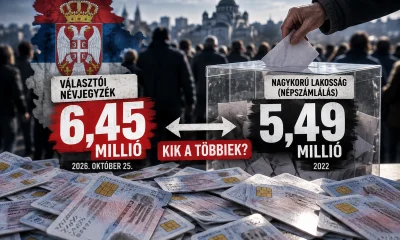
Serbia's demographic miracles at election timeSix and a half million voters, six and a half million residents – Who is really on the Serbian voter register?
Ten days before the Serbian elections, it became clear that the number of voters was slowly catching up with the total population, and if Serbs...
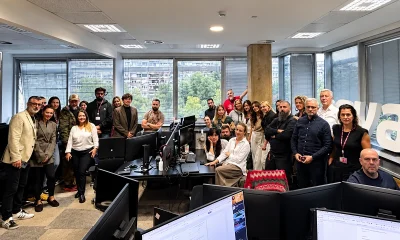
The execution of Nova.rs: new editor-in-chief or severance payTen days before the elections, journalists from the opposition-leaning Serbian news portal Nova received an ultimatum
The new management gave the journalists of Nova.rs in Serbia less than 48 hours to decide whether to accept the editorial board's rejected...
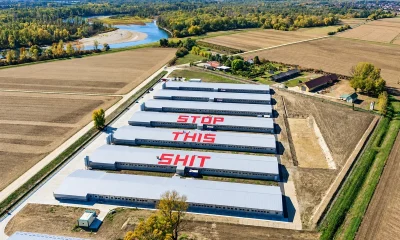
"Stop this shit!" Greenpeace tells Ukrainian chicken kingGreenpeace sent a message to the Ukrainian chicken king on a five-hundred-square-meter area near the Hungarian border
This time, Greenpeace activists didn't try to draw attention to themselves with a petition or a polite letter: they expressed their opinion on five hundred square meters in a Croatian...
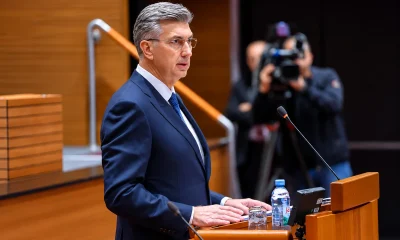
Ten years in power: Plenković's year-end speechThe opposition withdrew, and the Croatian Prime Minister responded with numbers: wages, pensions, GDP and inflation
Croatian Prime Minister Andrej Plenković gave his annual review to a rather ungrateful audience this time, after the opposition walked out of the...

Croats and Serbs Collaborate in Bosnia-HerzegovinaDodik and Čović, teaming up, would reshuffle power from ambassadorial posts to secret services
After the elections in Bosnia and Herzegovina, it is slowly becoming clear that the winner will not necessarily be the one who receives the most votes, but the one who...

Bosnian elections: the Komšić era is over, but the Dodik era continuesThe Bosnian Croats took back the presidency, with a dominant victory for the Serbs and a close victory for the Bosniaks.
Bosnia and Herzegovina elections 2026: one of the most important results of Sunday's elections is that with the victory of Darijana Filipović, Croats regained the seat they lost...


Pandora winks back, more than a corruption case?Can the former Montenegrin president and his son break champagne on the fifth anniversary of the Pandora Papers?
In five years, governments in a country can fall, political systems can change, and even the gates of the European Union can get closer...
The secret services also moved for Rybar, he would return to the BalkansFive Russians, a confiscated drone kit and some influential Moscow supporters – a strange film shoot in Montenegro
Montenegrin authorities have expelled Mikhail Zvinchuk, the founder of the Russian information network Rybar, and four of his associates, citing a national security risk. The Belgrade...

Kosovo avoids new elections at the last minuteHe became president of Kosovo three minutes after midnight, but lawyers say the election may still be valid
Justina Shiroka-Pula became the new president of Kosovo with 81 votes, while the results of the vote were announced just three minutes after the constitutional deadline...


Vučić's speech: according to Informer, this is what the whole world was waiting forVučić set the world straight in New York, and Informer strengthened with dad and mom
Aleksandar Vučić gave what may be his last major presidential speech at the UN. In addition to Kosovo, NATO and Croatia, Informer took care of the...

The government trembled in Fico's handsAfter Taraba's fall, it was not just a ministerial position that was at risk, but Robert Fico's parliamentary majority.
After thirty-three years, the Slovak parliament has once again ousted a minister, but the departure of Tomáš Taraba is only the spectacular part of what is a serious...


Fico would improve irrigation, but would not take water from HungarySlovak irrigation with Arab money: one of Slovakia's greatest treasures is hidden under the Csallóköz
According to Robert Fico, Slovakia needs to retain more water due to the severe drought, but it is not in its interest to...
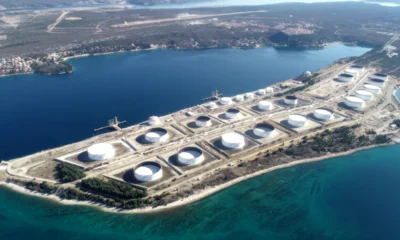

Janaf delivers two million tons of crude oil to MOLJanaf and MOL have reached an agreement: they signed a contract for the transport of slightly more than two million tons of crude oil
The agreement operates on the "take-or-pay" principle, meaning that the Hungarian oil company pays for the contracted transportation capacity even if it...
Could the US ambassador in Athens have helped overthrow the Romanian government?A scandal broke out in Washington, and an elegant restaurant dinner could cause headaches in Bucharest
US Ambassador Kimberly Guilfoyle's diplomatic career came to an ugly end, but the ripples of the scandal have reached beyond Athens. In Washington, influence peddling...
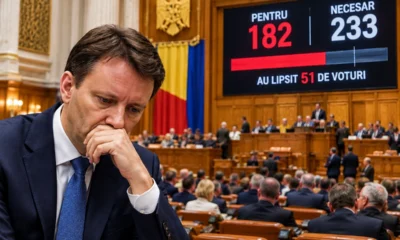

Romanian president rules out early electionsThe Mureșan government has fallen, but the president would not allow early elections in Romania just yet
According to the letter of the constitution, early elections should be held in Romania, but the head of state prefers to read between the lines. Siegfried...
