
Vojvodina
I am not an oligarch – János Zsemberi on money, power and Serbian footballFrom the camel caravan to the TSC: János Zsemberi on business, wealth, politics and Vojvodina
In Vojvodina, the list of those who have influence in business, football and – whether they like this wording or not – public life is not very long. János Zsemberi is one of them. He built a serious group of companies from Sat-Trakt, took TSC from the brink of extinction to the European Cup stage, while also receiving Hungarian subsidies, and is now also in the management of Serbian football. In a major interview with BALK, he talked about money, politics, Prosperitati, football and his own wealth – and also about why one word in particular annoys him: oligarch


He doesn't like to be called an oligarch, he considers himself a rich man, but not primarily because of his money, and as one of the leaders of Serbian football, he does not clearly state that everything in the championship is decided on the pitch. János Zsemberi, owner of SAT-Trakt, president of TSC and vice president of the Serbian Football Association, spoke about business, politics, Prosperitati support and football in a major interview with BALK.
About how he got from a farming family in Bajsa and from kitchen garden plans to the point where he estimates the value of his businesses at around two hundred million euros today; why he considers the Hungarian economic development support given to his companies to be justified. He also revealed what being rich means to him and why he wants to stay in Topolya.
At the TSC Academy, we talked about how he went from wanting to be a kitchen gardener, to transporting satellite receivers on camels in the desert, to becoming one of the richest people in Vojvodina.
From a camel caravan to a three-billion-dollar business
Who was János Zsemberi before 1993, before he became an entrepreneur? What was his childhood like, where did he start?
I was born here in Topolya, my mother is from Topolya, my father is from Bajsa. I was raised in Bajsa. My parents were farmers, my father is Slovak, my mother is Hungarian. We spoke two languages at home all the time. I went to a Hungarian school, and I helped my parents a lot in my childhood.
We were a family of kitchen gardeners, we had to be out in the fields all the time. Peppers, cabbage, vegetables, cauliflower, kohlrabi – there was everything. I wanted to continue this, I wanted to be a kitchen gardener. That's why I decided to study this further. I enrolled in Budapest and the University of Agricultural Sciences in Gödöllő. I ended up in Gödöllő, where I graduated in 1994.

We spoke with János Zsemberi at the TSC Academy, a great interview about money, business, football, success and what wealth is worth if you forget where you started (Photo: Árpád Kiss)
I was in Germany with Erasmus, I also studied wildlife management. But I wanted to come home and started my own business. It was an era when there was a great shortage of telecommunications equipment. How I got involved in this, I don't know. But I never neglected agriculture: if I had a little extra money, I helped my father, bought some land for him, and now I still have some land. I didn't rent out the land, I just ran out to look at the tractors. This is my hobby now.
You started Sat-Trakt thirty-three years ago. What was the decision without which the company wouldn't have nearly three billion dinars in annual revenue today?
We developed one of the largest telecommunications companies in the country. At first we only traded in equipment, then we were the representatives of Motorola, and we are still the representatives of a Finnish company today. We manufactured equipment in several places, in China, India, and later we started to supply it in Serbia.
I think the key is that I never made hasty decisions. You always had to be patient. A lot of my friends wanted more at a given moment than they could achieve at that time. They wanted to get to their destination faster than was possible. I never dared to take out big loans.
This tenacious, persistent, slightly conservative attitude brought the result. I always thought long-term. And I was in the right place at the right time. We were the generation that was given the opportunity, today's young people don't have that. But they have something different: they can create great things in AI. Our generation was given a great opportunity, unlike previous generations.
When did you first make so much money in your life that you thought: this could be a serious business?
When the embargo was lifted in 1995 and I was able to bring in a truck-mounted satellite dish for the first time, I made so much money that I thought I was very rich. We were talking about ten thousand marks at the time, but to me that meant more than maybe a million euros today.
I have had many interesting businesses. At university in Gödöllő, I met Libyan students who also delivered satellite receivers to Libya. We were representatives of an American company, and we brought the antennas from the neighboring country to other areas by camels through the desert. When we were really making a lot of money, they told us that we were not representatives for that area. But by then I had already earned my first million.
Then when the construction of cable TV started in Serbia, and we provided them with equipment, we were able to make great progress. Later, when we pulled out the optical cable from Belgrade to the Hungarian border, it was a big step, we sold it to Yettel. But we pulled out the independent optical from Sarajevo to Budapest. These were deals worth millions, they took us to a higher level. We had to take responsibility, and we always moved on the edge of legality, we never crossed it.
Was there a moment when you were actually afraid that you might lose everything you had built up because of Sat-Trakt or TSC?
I had some difficult moments. Maybe it wasn't like I could lose everything. I had a tight throat, I had to swallow a few things. It's not easy, because the competition is huge. And everyone has their own biggest problem. Today we have a thousand employees.
If an employee betrays you, it's a big disappointment, because I experience my entire business, every employee, as a family member. We are one big family, and I actually keep the entire business going because of them, because I already have my income. When I fight for my company, I'm actually fighting for their jobs too.
The next generation is already preparing to take over Sat-Trakt
There is now Sat Trakt in Hungary. Why was it necessary to create this company? Anna Zsemberi and Péter Zsemberi both hold management positions in the Hungarian Sat-Trakt. Will Sat-Trakt become a family business? Who will take over from you one day?
I would like to pass it on to my family. I have four children. My son, after completing his master's studies at Imperial London, came home and has been working with me for three years. My daughter, after Corvinus, completed her master's degree at the Business School. She is still in London now, working at the European Development Bank. I would like to lure her home too. It is not easy, because she also wants to prove herself, but I will not give up.
This is important because thinking together keeps the family together. Otherwise, everyone goes about their own business, and family members leave one after another. I hope that my younger daughters will also see this as a fantasy, and I can keep them here in Topolya.
I would like to clarify an old story. Why did the majority ownership of Sat-Trakt go to the Cypriot STSE Investment Limited at the time? Who was the ultimate beneficiary of the scheme, and why did it buy back 81 percent of the company in 2016? Why does STSE still have 10 percent today?
These are business decisions. There are no offshore companies in Cyprus anymore, and they have to be properly accounted for. I'm not sure if we used them as offshore companies at all. It was an interesting world in Serbia at the time. I really didn't want them to know who exactly was behind this serious business.
Maybe that was for the best: they could think whatever they wanted about who was behind it. It was a business decision, nothing more. We've been keeping that company in our books ever since. Especially when you want to apply later, you have to own the company. That's the reality behind the story.
Today, he is also the owner of eighteen other businesses. He started in telecommunications, but today his interests range from agriculture to IT, real estate, and hospitality. Are you consciously building a holding-type group of companies?
Yes, I would like to have more than one foot, because you never know where a company might stumble at any given moment. Telecommunications is my most valuable company. But if someday it has a maximum value and they offer a certain amount for it… Who knows. Or maybe the land is there, it’s very difficult to work with it because of the drought.
Then there is the company called Usluga, which I bought a while ago, and we manufacture funeral equipment. You never know where a problem will arise. The bigger the system, the more rational it is. I am not happy that this is the case, but unfortunately in certain sectors we cannot develop any further. Sometimes a good market opportunity arises that something can be bought. Then we buy it. And then we try to operate it, or if not, then we sell it later. So far I have always been in the phase where I have always bought everything but not sold anything. But sooner or later I see that I will have to, because it is difficult to supervise it like this.
Are all companies successful according to these?
We've had our share of business failures. But we can say that nine out of ten we succeeded and one we failed. That's the ratio.
“And why shouldn't this be for me?” – Prosperitati's millions
Sat-Trakt also participated in the creation of the Diplomatic Logistic Center (DLC). The company was founded in 2021 by twelve Voivodeship enterprises and individuals. Sat-Trakt was one of the founders with 8,33 percent. What is Sat-Trakt's business interest in the Diplomatic Logistic Center? Why did these twelve Voivodeship entrepreneurs come together in a joint real estate venture?
Precisely because I think this thing looks good, that twelve people can come together and achieve something together. Twelve entrepreneurs from Vojvodina, there is a business that holds them together, where they think together, try to manage something together. But otherwise it is very difficult. If I had known that it would be so difficult, I don't know if I would have joined. Because I expected it to be such a community, and an organization that strengthens entrepreneurs. Well, it is, but everyone has their own opinion, everyone works in a different sector. Everyone has to adapt to everyone else.
According to the press, Usluga, Agriacoop and Alarm-system, which are directly related, won a total of 776 million dinars, or about 6,6 million euros at the time, in the Prosperitati Foundation's tenders. What exactly were the investments made from these, and what did they bring to the community?
I know one thing, this support went to a good place. I didn't receive the most support either, but I am convinced that I am definitely one of the people who gave the most to my community. For example, I spent more than 20 million euros on football alone.
Is this just your own money?
Only my own money. And I didn't just give money to my community now. I donated as much money as I received from Prosperitati to the community before the foundation support. I thought a lot about not accepting the support from the Prosperitati Foundation, precisely so that such questions wouldn't be asked of me.

János Zsemberi told BALK that he considered for a long time whether to accept the support from the Prosperitati Foundation, because he expected that questions might arise later. In the end, he decided to use the support, which he emphasized was not for his own purposes, but for the development of his group of companies and the preservation of jobs (Photo: Árpád Kiss)
But then I thought about what my grandfather said: after World War II, he didn't accept land because he was a poor man. He said: I don't need any more land. And whoever accepted it found it easier to raise their family afterwards. And why shouldn't it benefit me, when I've done at least twice as much? Ultimately, the money strengthens my group of companies, strengthens the people there, the thousand employees. In other words, it strengthens the community, because I didn't take this on for myself.
And if I didn't get the support, I might have had to sell the Sat tract because I wouldn't have been able to keep up with Telekom, which is a state-owned company, or Yetel, which is owned by Arabs, or A1, which is owned by the richest man in the world. By the way, 35 percent of the investment made was supported, and 65 percent had to be added.
In the end, I didn't put in 65 percent, but 80, because the project ended up costing 8.7 million euros. We made a bit of a mess. But we did it so that we could stand on the market and preserve the jobs of the people here, primarily Hungarians.
"The word 'oligarch' annoys me"
What do you say to those who believe that a narrow circle of entrepreneurs close to the VMSZ, the oligarchs, received a lot of support from the Hungarian economic development funds in Vojvodina?
First of all, the word oligarch annoys me. Because I am not an oligarch. I am the child of simple farmer parents who fight for their daily lives, and fought, and started from scratch, and achieved what they achieved. I am not among the 100 richest people in Serbia. Maybe in the thousand, but even if I were among them, I would still try to live like a normal person and behave like a normal person.
I live here in Topolya, and not in Budapest or Belgrade. So I would reject the term oligarch. By the way, I think that great support can be given to those who can make something out of it, who can then give it back to the community, and who can add to it. For me, no matter how much money we are talking about, I had to add much more to that support, so that something could be made, and so that my business could grow, so that it could give people jobs.
Politics without party membership: "You always have to be on good terms with the current government"
He was a member of the Topolya Municipal Council between 2014 and 2018. In the 2016 election, the VMSZ–Pásztor István He was second on the list, then he was responsible for agricultural areas in the village council. He left in 2018. Why did he enter politics at the time, and why did he leave it?
First of all, I'll tell you why I joined. I joined because apathy prevailed in the city government here. We were very much a market town, where nothing happened, where everyone was satisfied with what they had. I saw that this whole thing wouldn't end well, that the Hungarian local government would slip. I thought that, due to my entrepreneurial mentality, I would try to change something, introduce an entrepreneurial approach, so that we could turn this wheel around and do something for the city.
I took care of the economy, agriculture, and sports, and I got involved in it to help the city. I was not a member of the Vojvodina Hungarian Association, and I still am not. I have never been a member of any party, I promised my father back then that I would never join any party, and I still stick to that. As an entrepreneur, you always have to be on good terms with the current government, and not because I am a swing politician now.
I am an entrepreneur who wants to create. So I always recognize whoever comes to power, that is, the people vote for them. I want to implement my ideas and do something for the city. We have to work together, and the more we work together, the greater things we are capable of.
We managed to bring in young people in Topolya, people who also think similarly. We have perhaps one of the youngest mayors. We managed to build a good team, and then I withdrew from all this, after I thought that this approach had been realized somewhere and the projects had started. I think we have good city management.
What is your relationship with the Vojvodina Hungarian Association like today?
Correct. I have a correct relationship with everyone.
Has Sat-Trakt or you personally ever provided financial support to VMSZ or its campaign?
Not financially, there was no need for that. Anyway, as the greatest representatives of the Hungarians in Vojvodina, yes. I received them, we have a fair relationship.
TSC: from the Bajsa children's team to the academy
In 2005, he took over the Topolya football club, which was struggling with serious financial problems and was on the verge of extinction. Why? He previously stated that it was a football club, but he ran it like a company. What exactly does that mean?
There were connections here. My brother played here at one time, and so did I. And the club got into a situation that was bad to watch because the first team was disbanded. The club didn't disband, but there were debts. I had a good little team in Bajsa. I eventually brought the kids here.

János Zsemberi took over the struggling Topolya football club in 2005. He says his goal was not to build a big club, but to have a place where the children of the area could play football. He has stuck to one rule ever since: the children do not have to pay for training, because in his opinion “football is a sport for poor children” (Photo: Árpád Kiss)
Bajsa has been back in the Vojvodina league since then, and we started to slowly build Topolya. But we didn't have such ambitions to get higher, but we put the club's operation on a very serious footing. We put the infrastructure in order: we put out chairs, we renovated the changing rooms. We built a healthy club. The goal was the same: to build a community. So that the children would have a place to train.
I immediately stopped paying for training because I believe that football is a sport for poor children. Because nowadays you have to pay for everything. That's okay, because that's how the club is maintained. But I supported it because of its community-building power. Out of love.
Do children still play soccer for free here today?
Yes!
How many children? Are there many Hungarian children?
Here at the academy, the composition of the city is roughly reflected. Up to the age of 14, about 60 percent of the children are Hungarian. From the age of 14, we bring them from all over the country and professionalize them. In the dormitory, about two-thirds of the children are Serbian and one-third Hungarian.
The other day I was at Deputy State Secretary István Kollai's, I went with data and we counted that more than 30 kids from here have joined some club in Hungary. That's not a small number in 8-9 years. One or two guys already have very good careers. We have very serious results.
Not to mention that we have 21 sub-centers: Magyarcsernye, Muzslya, Ittabé, Temerin, Kishegyes, Óbecse, Ada, Péterréve, Hajdújárás, Magyarkanizsa, Tóthfalu, all receive support. Kishegyes, Bácskossuthfalva, Pacsér. We pay the coaches. That means there are more than two thousand children in the system.
What would happen to TSC without the Hungarian state's money?
Since you mentioned that you discussed with the Deputy Secretary of State: if Hungarian state funding were to cease tomorrow, would the current TSC system be self-sustaining?
I will tell you honestly, we have some reserves, but in the long run we cannot stand on our own two feet. It is true that I have a business, but it is not my job to pursue national politics. It is not my job to ruin my businesses because of football. I can give a million or two, I have already given twenty or so million - in euros over ten years. I can continue to give 1-2-3 million euros a year, but I do not have the opportunity to give more.
We created a beautiful academy, a stadium, and you can argue about whether this was necessary or not. I think it's a good thing. But we've already created this, it's already there. We just have to maintain it. I think we should take on this together: on my part, on the part of the club and on the part of the Hungarian state. It wouldn't be good if foreign capital had to be brought in and foreigners were running what we, Hungarians, built.
What is the answer to the Hungarian taxpayer who asks: why should he finance a football academy in Topolya?
No club in the world works positively. When we played in Europe, I took the coaches to the academies. Everywhere, either the city or the federation pays for the academy. That's a minus, that's a commitment, especially with such a diverse system as ours. I accept that the first team is not helped. I accept it because it brings our good name. The image of the country. I don't even ask for that. But for these children, to eliminate the support and reduce it to six times less - because that's what we're talking about now - it will be very difficult.
Do you think the local population, like Vojvodina, feels that TSC is theirs?
I think so. The majority of the community feels like it belongs to them. Of course, there are certainly dissenting voices. We have gathered the best Hungarian coaches and colleagues from Vojvodina. Our fans also come from many places. When there is a big match, many people come from all over Vojvodina . We breathe together, only those who are here can feel this.
Behind the scenes of Serbian football
You are the vice president of the Football Association of Serbia, yet you said in 2024: you would do more if asked more often. What does this mean? A vice president does not have as much influence on the functioning of the association as we might think from the outside?
I already have some experience, mainly in infrastructure. A Hungarian company built our fields, which are the best in Central and Eastern Europe. This Hungarian company is partly owned by a guy from Temerin. Crvena Zvezda, Vojvodina accepted my advice, many others did not take it and built fields that do not stand up to the test. In order to always be on good terms with everyone, you have to swallow a lot.
You are also the chairman of the supervisory board of MOL Serbia, and they are in an intensive period. What can you tell us about the state of negotiations with the Serbian Petroleum Industry Company?
Sometimes things get stuck, sometimes here, sometimes on the Russian side, sometimes on the American side. Now we've come to the point where I'm not smart either. I'm the chairman of the supervisory board, my job is to make sure there's no abuse.
What was the biggest risk – and biggest mistake – of your business career?
There is always a risk involved. When someone builds optics, they don't know if they will be able to sell it. I joined a catering business as a fourth silent partner. It is a very difficult profession, it is very low-paying and I invested quite a lot of money in it. I would be happier if I wasn't a part of it.
Do you feel like a rich person?
It's not about money that makes someone rich. Often, the poorer person is richer and feels better. I consider myself a rich person because of my children. I am rich because I can sit down and talk to you and anyone else. They ask my opinion. And I can look anyone in the eye, no one can tell me that I cheated.
If you were to sell all your business interests today, how much would the Zsemberi Group be worth?
I don't know... Maybe around two hundred million euros? One person doesn't need that much.
Topolya even after two hundred million euros
As the vice president of the Football Association of Serbia, can you claim that the results of the Serbian championship are decided on the pitch?
I said it in an interview before: it's better to get out honestly than to stay in dishonestly. I still stand by that today and wouldn't add anything more to it.
Once you leave Sat-Trakt and TSC, what would you like people to say about János Zsemberi in Topolya twenty years later?
I didn't think about that. It's people's business, how they make a living. I definitely want to stay here, I don't want to pocket a bunch of money and move to warmer climes. I want to be a part of this community. I'll definitely continue to give some of my income back to my community.
As the owner of a telecommunications company, why do you feel comfortable where there is no signal?
I was in the countryside once and my phone broke. I felt like maybe it would have been better if my hand had been broken. The first day was bad, it was weird, but the next day, the third day it was really good. When you go hunting – although that’s not trendy anymore – or just to walk in nature…
I was in Canada for two weeks without shooting anything. I enjoyed nature, rode horses, and I didn't have a phone. At home, I still call at midnight, but at seven in the morning I have the phone in my hand again. In nature, you have time for yourself. To think. To calm down, to live with nature. These relaxations are important.
How many times does this happen in a year?
It's not like this every year. We say twice every three years.
What would you do differently today if you were thirty again?
I'm not saying I did everything perfectly. There must have been something different. I don't know.
You now have money, a group of companies, a stadium – or rather a club with a stadium – a football academy, and you are sitting at the top of Serbian football. What is it that you still haven't managed to achieve?
Ambition is always needed. I would like this Academy to function smoothly, because it is difficult to achieve this. I wish health for myself and others. I will be honest: I wish people understanding. That they be accepting of each other. That is what I wish.


"Stop this shit!" Greenpeace tells Ukrainian chicken king

After the flamingos, students also rebelled against Edi Rama

Serbia's demographic miracles at election time

Ten years in power: Plenković's year-end speech

Could the US ambassador in Athens have helped overthrow the Romanian government?

The number of victims of the August Omiš fire has risen to five

The execution of Nova.rs: new editor-in-chief or severance pay

Dodik already feels that Vučić will winDodik already feels Vučić's victory, and the police ensured the calm of the campaign rally in Zrenjanin

The secret services also moved for Rybar, he would return to the BalkansFive Russians, a confiscated drone kit and some influential Moscow supporters – a strange film shoot in Montenegro

Waste-to-energy plants: Croatia plans four facilitiesGarbage can be used to generate energy, but the most heated debate has centered around Croatia's waste policy.

Croats and Serbs Collaborate in Bosnia-HerzegovinaDodik and Čović, teaming up, would reshuffle power from ambassadorial posts to secret services

Is the independent election observer the Vučićs' biggest enemy?The authorities are attacking independent election observers, while the CRTA continues to count irregularities

The Rybar got caught in the Montenegrin netMontenegrin secret service arrests five Russians, while Moscow is already talking about a prisoner exchange

Janaf is not lost, it is only transformed.Croatia would build a new energy giant, and MOL will slowly be forced to get used to the idea


Orbán, Captain, the boss, the pressure cooker and the cupbearerThe Adriatic oil pipeline brought Hungarian and Croatian ministers together in Zagreb, while Serbia received a political warning from Split.
Hungary and Croatia discussed the capacity of the Adriatic oil pipeline, the Krk LNG terminal and a joint gas field in Zagreb. Meanwhile, the MED9 Split Declaration...


Why are Hungarians afraid to let passengers on the Falcon?The Falcon would fly, but without passengers for now: Hungary is testing the Belgrade-Budapest high-speed railway
A lot can happen to a railway line in seven months, especially if there is a change of government at one end, the...

The last eight years of Ernő Kiss reflected in his lettersThis is not your usual October 6th commemoration, this time we will show you something that the reader will not have access to anywhere else.
On October 6th, we remember the martyrs of Arad, but this time we are not telling the story of Ernő Kiss' execution. A photograph of him, only fifty years old, has been found...


Possession and Obsession (FEST '26)Ustasa past, boycott and lifetime achievement award: Lordan Zafranović released another alligator into the Balkan swamp
Croatian filmmaker Lordan Zafranović has once again managed to open wounds that have never truly healed in the Balkans. With his film Children of Kozara,...


Marina, Marina, Marina (for MV's final farewell)A Marina, a Vysotsky, a few films and a Whistle – the story of a world star with Hungarian detours
The name Marina Vlady evokes an entire era: French films, Cannes, Miklós Jancsó and Márta Mészáros, and above all, Vladimir Vysotsky. But...

Fool's Tale: Do You See, Hear – Do You Cut? (Bicskei & Bakos in Fonó)A fairy tale from the steppe, world music from Fonó – a joint evening between Zoltán Bicskei and Árpád Bakos
Sometimes the fool of the plain rolls all the way to Fonó in Budapest, and he doesn't even need legs to do it. Zoltán Bicskei...
Serbia's demographic miracles at election timeSix and a half million voters, six and a half million residents – Who is really on the Serbian voter register?
Ten days before the Serbian elections, it became clear that the number of voters was slowly catching up with the total population, and if Serbs...
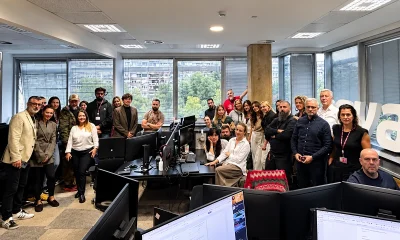
The execution of Nova.rs: new editor-in-chief or severance payTen days before the elections, journalists from the opposition-leaning Serbian news portal Nova received an ultimatum
The new management gave the journalists of Nova.rs in Serbia less than 48 hours to decide whether to accept the editorial board's rejected...
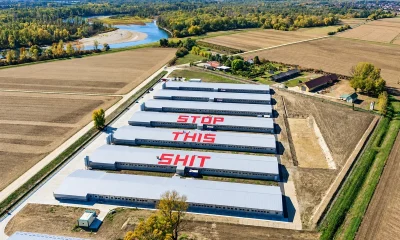
"Stop this shit!" Greenpeace tells Ukrainian chicken kingGreenpeace sent a message to the Ukrainian chicken king on a five-hundred-square-meter area near the Hungarian border
This time, Greenpeace activists didn't try to draw attention to themselves with a petition or a polite letter: they expressed their opinion on five hundred square meters in a Croatian...
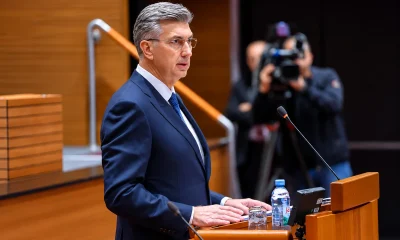
Ten years in power: Plenković's year-end speechThe opposition withdrew, and the Croatian Prime Minister responded with numbers: wages, pensions, GDP and inflation
Croatian Prime Minister Andrej Plenković gave his annual review to a rather ungrateful audience this time, after the opposition walked out of the...

Croats and Serbs Collaborate in Bosnia-HerzegovinaDodik and Čović, teaming up, would reshuffle power from ambassadorial posts to secret services
After the elections in Bosnia and Herzegovina, it is slowly becoming clear that the winner will not necessarily be the one who receives the most votes, but the one who...
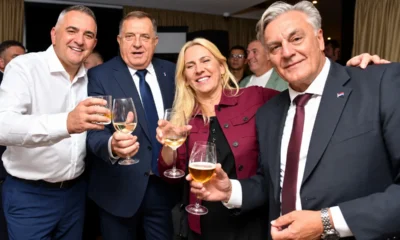

Bosnian elections: the Komšić era is over, but the Dodik era continuesThe Bosnian Croats took back the presidency, with a dominant victory for the Serbs and a close victory for the Bosniaks.
Bosnia and Herzegovina elections 2026: one of the most important results of Sunday's elections is that with the victory of Darijana Filipović, Croats regained the seat they lost...


Pandora winks back, more than a corruption case?Can the former Montenegrin president and his son break champagne on the fifth anniversary of the Pandora Papers?
In five years, governments in a country can fall, political systems can change, and even the gates of the European Union can get closer...
The secret services also moved for Rybar, he would return to the BalkansFive Russians, a confiscated drone kit and some influential Moscow supporters – a strange film shoot in Montenegro
Montenegrin authorities have expelled Mikhail Zvinchuk, the founder of the Russian information network Rybar, and four of his associates, citing a national security risk. The Belgrade...

Kosovo avoids new elections at the last minuteHe became president of Kosovo three minutes after midnight, but lawyers say the election may still be valid
Justina Shiroka-Pula became the new president of Kosovo with 81 votes, while the results of the vote were announced just three minutes after the constitutional deadline...


Vučić's speech: according to Informer, this is what the whole world was waiting forVučić set the world straight in New York, and Informer strengthened with dad and mom
Aleksandar Vučić gave what may be his last major presidential speech at the UN. In addition to Kosovo, NATO and Croatia, Informer took care of the...

The government trembled in Fico's handsAfter Taraba's fall, it was not just a ministerial position that was at risk, but Robert Fico's parliamentary majority.
After thirty-three years, the Slovak parliament has once again ousted a minister, but the departure of Tomáš Taraba is only the spectacular part of what is a serious...


Fico would improve irrigation, but would not take water from HungarySlovak irrigation with Arab money: one of Slovakia's greatest treasures is hidden under the Csallóköz
According to Robert Fico, Slovakia needs to retain more water due to the severe drought, but it is not in its interest to...

Janaf delivers two million tons of crude oil to MOLJanaf and MOL have reached an agreement: they signed a contract for the transport of slightly more than two million tons of crude oil
The agreement operates on the "take-or-pay" principle, meaning that the Hungarian oil company pays for the contracted transportation capacity even if it...
Could the US ambassador in Athens have helped overthrow the Romanian government?A scandal broke out in Washington, and an elegant restaurant dinner could cause headaches in Bucharest
US Ambassador Kimberly Guilfoyle's diplomatic career came to an ugly end, but the ripples of the scandal have reached beyond Athens. In Washington, influence peddling...

Romanian president rules out early electionsThe Mureșan government has fallen, but the president would not allow early elections in Romania just yet
According to the letter of the constitution, early elections should be held in Romania, but the head of state prefers to read between the lines. Siegfried...
